
Andreaea rupestris
Andreaea rupestris
Description
Growing requirements
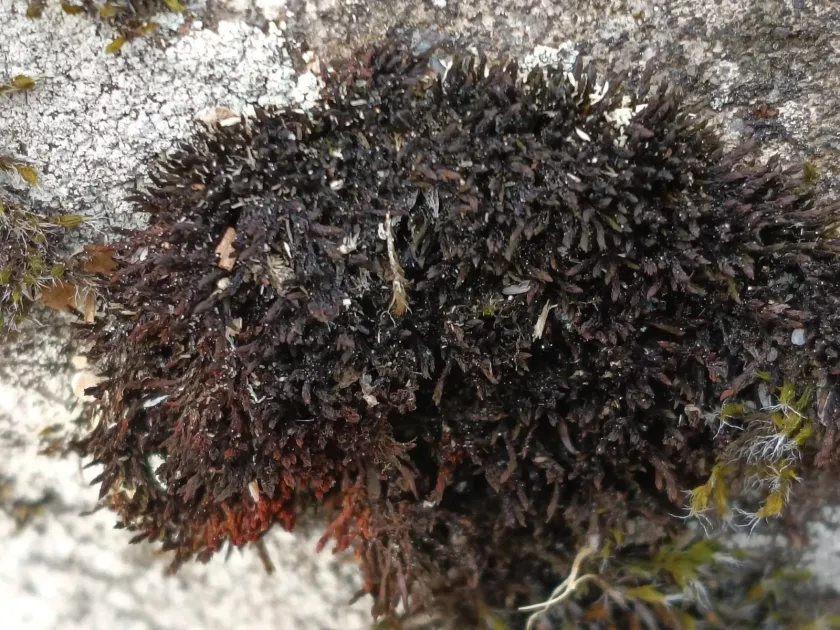
Andreaea rupestris, commonly known as the rock moss, belongs to the family Andreaeaceae. It is a small, acrocarpous moss that typically forms cushions or mats. Its characteristic dark, often brownish-black color serves as a protective mechanism against the harsh solar radiation found in the alpine and arctic habitats where it thrives.
The distribution of this species is nearly cosmopolitan, though it is predominantly found in cold, mountainous regions and polar areas. Unlike traditional crops, Andreaea rupestris is an obligate epilith, meaning it grows exclusively on exposed rock surfaces such as granite, quartzite, and other acidic substrates. It does not require any agricultural management or soil cultivation.
The botanical uniqueness of the rock moss lies in its sporophyte structure. Instead of a standard operculum and peristome, the capsule splits into four longitudinal valves held together at the top and bottom. These valves open under dry conditions, allowing spores to be released efficiently during periods of wind, which aids in the dispersal of the species across rocky landscapes.
Regarding environmental requirements, the plant is an extreme xerophyte. It is highly resistant to desiccation and can survive prolonged periods of freezing temperatures. It relies on atmospheric moisture, such as fog and precipitation, to maintain metabolic activity. The species does not require fertilizers or irrigation, as its nutritional uptake is adapted to the sparse nutrients found on rock surfaces.
In terms of economic or agricultural utility, Andreaea rupestris serves no purpose as a food or industrial crop. Its primary significance is ecological. It is a pioneer species that stabilizes rocky surfaces and initiates the pedogenesis process by breaking down rock minerals. It acts as a foundational component in high-altitude and tundra ecosystems, providing a micro-habitat for various microorganisms.