
Andreaea alpina
Andreaea alpina
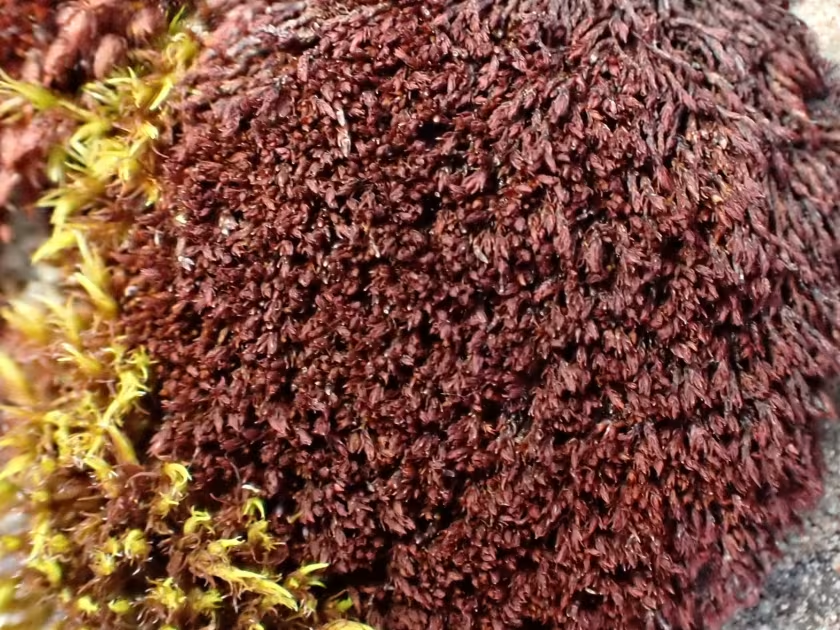
Description
Growing requirements
Andreaea alpina is a specialized moss species belonging to the Andreaeaceae family. It is a wild mountain-dwelling plant and is not categorized as an agricultural crop, as it does not possess traits suitable for cultivation or economic harvesting.
The natural habitat of this moss is restricted to harsh alpine environments across Europe and parts of Greenland. It typically colonizes acidic rock faces where it can withstand intense environmental stress and low temperature profiles throughout the year.
Its growth requirements center on high atmospheric humidity and constant moisture supply from glacial meltwater or fog. Unlike typical crops, it lacks a root system, absorbing nutrients directly from the lithosphere and precipitation.
The morphology of Andreaea alpina reflects its adaptation to the alpine climate, featuring dense, dark-pigmented tufts that maximize thermal efficiency in high-UV light conditions. Growth rates are exceptionally slow due to the nutrient-poor environment.
From an ecological perspective, this plant acts as a primary producer in extreme rocky areas. It contributes to rock weathering and the initial accumulation of organic matter, providing a foundation for future soil formation.
Main diseases and pests
Global climate change remains the most significant threat to Andreaea alpina populations. As average temperatures rise, the niche environments characterized by consistent cold and moisture are shrinking, forcing the species to compete for survival.
Atmospheric deposition of pollutants is a major concern. Because the moss relies on direct absorption of moisture from the air, it is highly susceptible to toxins and chemicals present in precipitation, which can cause significant cellular damage.
Human disturbance, including excessive trekking and mountaineering activities, can lead to the physical removal or destruction of moss colonies. Due to the very slow recovery time, even minor physical damage can result in long-term habitat degradation.
Competitive displacement by vascular plants and other lichens that are expanding their range into higher altitudes presents a further challenge to the survival of this specific moss species.
The preservation of Andreaea alpina depends entirely on maintaining stable alpine ecosystems. Without specific conservation strategies focused on climate stability and air quality, the population of this species remains at risk of local extinction.