
Andreaea alpestris
Andreaea alpestris
Description
Growing requirements
Andreaea alpestris is a species of acrocarpous moss belonging to the family Andreaeaceae. While not a conventional agricultural crop, it is a scientifically significant organism that dominates extreme alpine and arctic niches where higher plants struggle to survive.
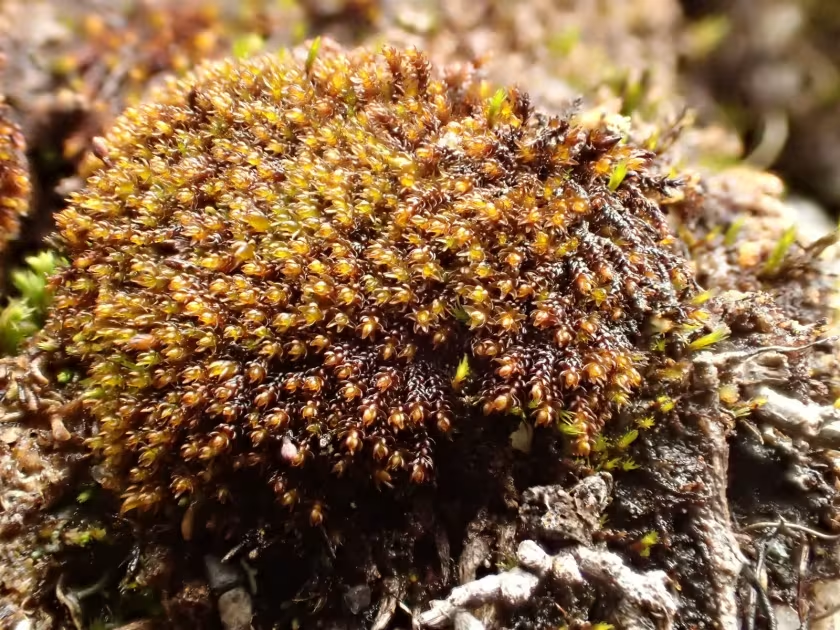
The distribution range of this species includes circumpolar regions and alpine belts across the Northern Hemisphere. It is primarily found on silicate rocks, where it forms dense, dark-colored mats that can withstand high levels of exposure and severe climatic conditions characteristic of mountain ranges.
Botanically, the plant is characterized by its cushion-like growth habit and unique dark brown or blackish coloration. These pigments act as natural shielding against intense solar radiation, which is essential for survival in the thin, high-altitude air where ultraviolet light exposure is significant.
Environmental requirements for this moss are distinct: it thrives in areas with cryogenic soil processes, low average temperatures, and limited nutrient availability. The plant's physiology is optimized for very short growing seasons, allowing it to complete its reproductive cycle rapidly when temperatures rise above freezing.
Regarding its utilization, Andreaea alpestris is not an agricultural commodity, yet it serves a crucial ecological function. As a pioneer species, it plays a vital role in primary succession, aiding in rock weathering and the accumulation of organic matter, which eventually prepares the soil for colonization by other plant species.