
Marula
Sclerocarya birrea (A. Rich.) Hochst. ssp. caffra (Sond.) Kokwaro
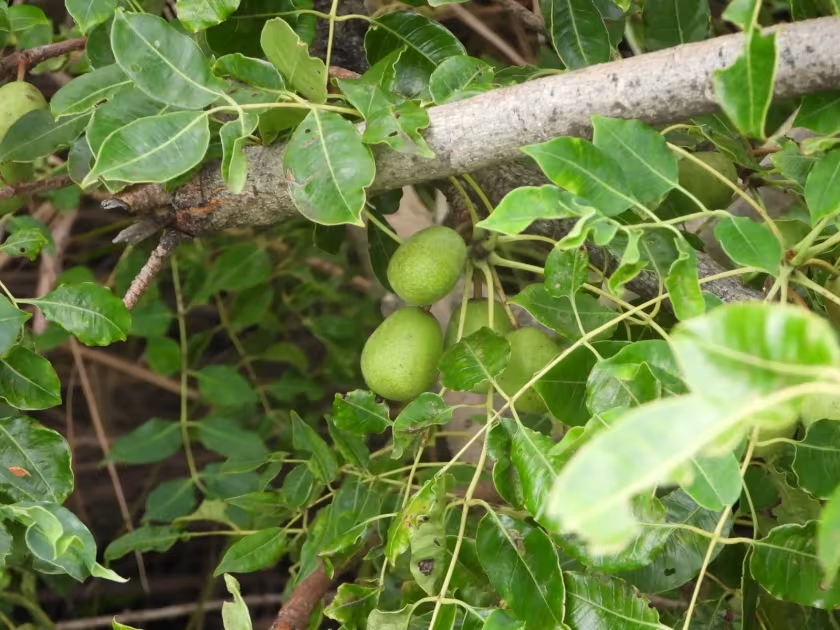
Description
Growing requirements
Marula (Sclerocarya birrea) belongs to the Anacardiaceae family. This deciduous tree, growing up to 10–15 meters in height, is native to the savannas of sub-Saharan Africa.
The crop is highly drought-tolerant and prefers well-drained sandy or loamy soils. It can thrive in regions with annual rainfall between 200 and 800 mm, making it a promising candidate for adaptation in arid climatic zones.
The plant does not tolerate frost, thus its distribution is restricted to tropical and subtropical belts. For optimal growth and fruit production, the tree requires intense sunlight and well-drained soil to prevent root rot.
Propagation of marula is usually done through seeds; however, modern agronomic practices include vegetative propagation, such as grafting, to maintain desirable cultivar traits and accelerate the time to fruit production.
The tree exhibits dioecy, meaning there are separate male and female individuals. For effective yields in commercial orchards, it is essential to maintain a correct ratio of female and male trees to ensure high-quality cross-pollination.
Yield
Marula is valued for its fruits, which are rich in Vitamin C, and its nutritious seeds. Its economic use includes the production of juice, alcoholic beverages such as the Amarula liqueur, and valuable oil extracted from the kernels.
A single mature tree can yield between 500 and 2000 fruits per season, equivalent to dozens of kilograms of biomass. The fruit features a thin skin, fleshy pulp, and a stone containing seeds rich in fats and proteins.
Marula oil is widely used in the cosmetic industry due to its high antioxidant and oleic acid content. It is known for its excellent absorption properties and is frequently used in skincare and haircare products.
The leaves and bark of the tree are also utilized in traditional medicine and as fodder for livestock. This makes marula a versatile, multi-purpose crop with significant economic potential for developing agricultural sectors.
Harvesting is typically carried out during the ripening season when the fruits fall to the ground. It is critical to collect the fallen fruits promptly, as they quickly undergo fermentation in the hot climate.
Main diseases and pests
Marula is generally considered a resilient crop, but it is susceptible to certain pests typical of the Anacardiaceae family. These include various types of weevils and fruit borers that damage the developing fruit.
During early growth stages, seedlings can be prone to fungal diseases caused by excessive soil moisture. Preventive measures include selecting the right site and maintaining an appropriate watering schedule.
In its natural habitat, the tree is frequently browsed by wild animals, such as elephants, which favor the fruits and bark. Protective fencing is required when establishing commercial agricultural plantations.
Bacterial infections can affect the tree through mechanical injuries to the trunk. Regular sanitary pruning helps minimize the risk of disease spread within the plantation.
The lack of specific commercial pesticides for marula necessitates that farmers rely primarily on biological pest control methods and integrated plant protection systems.