
Suaeda edulis
Suaeda edulis Flores Olv. & Noguez
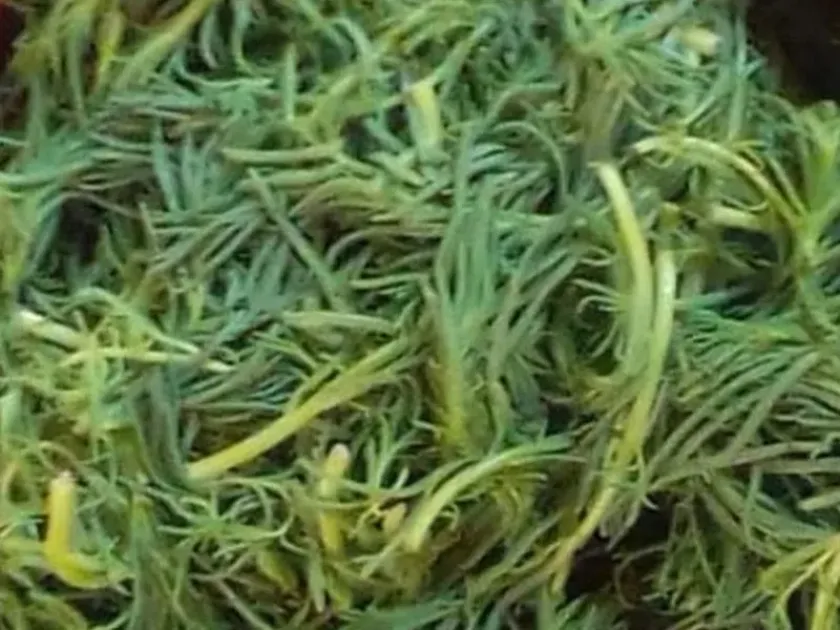
Description
Sowing dates
Suaeda edulis (known as edible suaeda) belongs to the Amaranthaceae family and is recognized for its remarkable halophytic properties. Sowing usually occurs in the spring when soil temperatures reach 12–15 degrees Celsius, providing the necessary warmth for rapid germination.
In regions with shorter growing seasons, starting seeds in seedling trays or greenhouses is highly recommended. This practice allows for earlier establishment and ensures that plants are well-developed before being transplanted to the main cultivation field.
The spacing between plants is crucial for air circulation, which significantly impacts overall plant health. Growers are advised to maintain a distance of approximately 40–50 centimeters between rows and 20–25 centimeters between individual plants to prevent overcrowding.
Seeds should be sown shallowly, ideally no deeper than 1 centimeter. Because the seeds are tiny and lack extensive nutrient reserves, maintaining a moist soil surface during the first two weeks is vital to ensure successful sprouting and emergence.
After emergence, thinning is necessary if seeds were sown too densely in the row. Proper spacing ensures that every plant has access to sunlight and soil nutrients, ultimately leading to more uniform growth and higher quality produce for market.
Growing requirements
As an obligate halophyte, Suaeda edulis requires specific environmental conditions to thrive. Unlike most conventional crops, it relies on sodium ions for various physiological processes, which means soil salinity is not a limitation, but rather a functional requirement for optimal growth.
This crop is highly light-demanding. Choosing an open, sun-drenched site is essential for maximizing biomass and flavor profile. Inadequate lighting results in spindly, weak plants that lack the crisp texture and intense flavor that are characteristic of this vegetable.
Soil texture should be loose and well-aerated, even though the species is native to saline environments. Poor drainage or heavy, compacted soil can lead to anaerobic conditions around the roots, hindering nutrient uptake and slowing down plant development.
Temperature management is key to preventing premature bolting. Ideal temperatures for vegetative growth are between 20 and 28 degrees Celsius. When temperatures rise significantly higher, the plant may trigger its reproductive cycle, resulting in bitter-tasting, tough stems.
Fertilization strategies must be handled with care. Excess nitrogen can lead to high nitrate accumulation in the leaves, while a lack of essential micronutrients may cause chlorosis. Balanced potassium-based fertilizers are generally preferred to sustain vigorous growth throughout the season.
Yield
With correct agronomic management, Suaeda edulis can provide consistent and high-quality yields. A typical harvest can reach 15–25 tons per hectare, depending on the intensity of the farming practices and the degree of soil salinity provided in the environment.
One of the most effective ways to boost total yield is to practice regular topping of the main shoots. This technique encourages the plant to branch out, promoting multiple harvesting cycles from the same individual plant throughout the growing season.
Weed management is paramount in the initial phases of cultivation. Because Suaeda grows relatively slowly during its early stages, it requires a clean field to establish itself successfully without being smothered by faster-growing competitive weeds.
Irrigation with low-concentration saline water can be used as a strategic tool to improve the taste and crispness of the crop. This mimics the plant's natural habitat and encourages the accumulation of beneficial minerals that are highly valued by consumers.
Estimating yields should be based on the density of the canopy and the frequency of harvests. Growers should monitor the rate of regrowth after each cut, adjusting water and mineral inputs to ensure the plants remain in a vegetative, rather than reproductive, state.
Main diseases and pests
Suaeda edulis is generally robust against many common vegetable diseases, thanks to its specialized chemical composition. However, high humidity and poor airflow can create environments conducive to the growth of fungal pathogens like powdery mildew.
Aphids represent the most significant pest risk for this crop, as they often target the succulent, young shoots. Implementing biological pest control, such as encouraging natural predators, or using botanical insecticides, helps protect the harvest without compromising quality.
Root rot is typically an issue only when there is improper irrigation management or poor soil drainage. Keeping the root zone well-drained and avoiding standing water are the best preventive measures to ensure plant longevity and health.
Occasional infestations of soil-borne pests, like wireworms, can damage the crown of the plant. Regular monitoring of the field and the use of physical or pheromone traps can keep these populations below the threshold that would cause significant economic damage.
Strict crop rotation should be followed to avoid the build-up of host-specific pests and diseases in the soil. A three- to four-year interval between Suaeda crops is ideal for maintaining soil hygiene and ensuring sustained productivity for the farmer.
Harvesting
The harvesting process begins once the plants have reached a height of 15–20 centimeters. At this stage, the plant tissues are most tender and flavorful, providing the best quality for fresh market consumption or culinary use.
Harvesting is performed by selectively cutting the top portions of the shoots. This selective approach allows the plant to continue growing from the base, which is key to facilitating multiple harvests and maximizing the output per plant.
Timing the harvest is critical; early morning is preferred when the plants are at peak turgor. Harvesting during the heat of the day can cause rapid wilting, making the produce less attractive and reducing its shelf life significantly.
Post-harvest handling requires rapid cooling to temperatures between 2 and 5 degrees Celsius. Because the crop has a high water content, it is highly sensitive to moisture loss, so storing it in moisture-retaining packaging is essential for maintenance.
Transport must be executed using cold-chain logistics to prevent the deterioration of the delicate foliage. By keeping the produce cool and shielded from direct sunlight, the shelf life can be extended to approximately one week, ensuring a fresh and premium product for the final customer.