
Suaeda altissima
Suaeda altissima (L.) Pall.
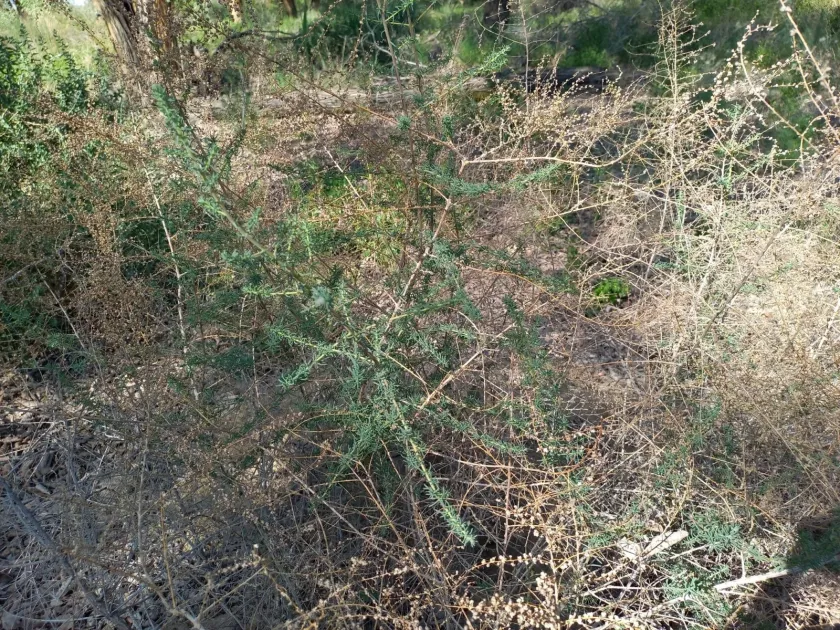
Description
Sowing dates
Suaeda altissima is typically sown in the spring when soil temperatures reach 10–12 degrees Celsius to ensure robust germination of seeds.
Seeds should be planted at a shallow depth of 1–2 centimeters, allowing them to utilize surface moisture effectively for rapid establishment.
Row cropping with a spacing of 30–45 centimeters is recommended to provide sufficient space for plants to develop their biomass without excessive competition.
High seed vigor allows for uniform stand establishment, which is essential for uniform growth across saline landscapes or reclaimed soils.
Successful sowing depends on timing, aiming for periods when adequate moisture is available in the soil profile to sustain the emerging seedlings.
Growing requirements
Belonging to the Amaranthaceae family, Suaeda altissima is a halophytic species highly adapted to extreme soil salinity and arid environmental conditions.
The plant thrives in full sunlight, which is necessary for maximizing photosynthetic activity and the subsequent production of organic vegetative mass.
It displays remarkable flexibility regarding soil texture, though it prefers environments where soil structure supports moderate moisture retention.
As a salt-tolerant crop, it can flourish in areas where conventional agricultural plants would struggle, making it an ideal choice for marginal lands.
Climatic requirements are relatively modest, as the plant has evolved to cope with fluctuating temperatures and limited water availability during the growth phase.
Yield
The yield of Suaeda altissima is fundamentally tied to the degree of soil salinity and the availability of water throughout the growing season.
Under favorable conditions, this species produces significant quantities of biomass that can be harvested for industrial or agricultural applications.
Beyond biomass, productivity is also measured by the plant's efficiency in absorbing and sequestering salts from the soil, aiding in land restoration.
Optimizing plant density and minimizing weed interference are critical factors that directly influence the total biomass yield per hectare.
Regular monitoring of growth stages allows for the fine-tuning of agronomic practices to ensure consistent productivity in varying environmental conditions.
Main diseases and pests
Suaeda altissima possesses inherent resistance to many common fungal and bacterial diseases, largely due to the saline chemistry of its internal tissues.
Pest pressure is generally minimal, as the high mineral salt content in the leaves and stems acts as a natural deterrent against many generalist insects.
Scouting for early-stage seedling pests is advised, but severe infestations are rare once the plant enters its rapid vegetative growth phase.
The management of threats focuses primarily on non-chemical weed control to eliminate resource competition during the crucial establishment stage.
Due to its natural defenses, the crop serves as an excellent candidate for low-input agricultural systems, requiring fewer pesticides than conventional crops.
Harvesting
Harvesting is performed during the peak of vegetative growth, before the stems become overly lignified, to ensure the highest nutritional quality.
For fodder production, timing is key to capturing the optimal balance between protein content and total dry matter before the plant reaches maturity.
Mechanical harvesting utilizing specialized mowing equipment ensures efficiency and allows for clean cuts that do not disrupt the plant's root structure.
Post-harvest handling is critical, requiring quick drying or ensiling to stabilize the organic mass and preserve its nutritional and chemical characteristics.
Harvest scheduling may be adjusted based on regional seasonal weather patterns to optimize both yield volume and the intended utility of the crop.