
Five-spined bassia
Bassia quinquecuspis
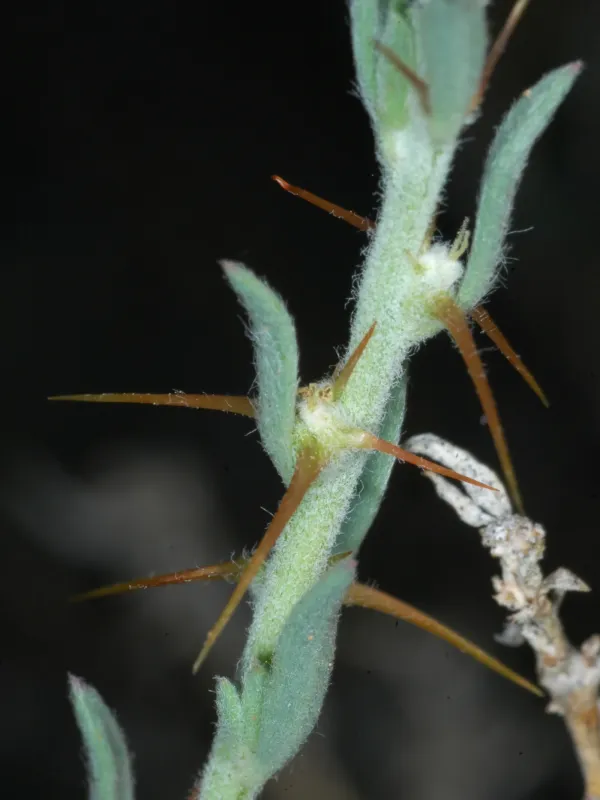
Description
Sowing dates
Five-spined bassia is a heat-loving plant that requires soil temperatures of at least 12–15 degrees Celsius for consistent and rapid germination.
Sowing is typically performed during the spring season once the frost risk has fully passed to protect the developing seedlings from cold injury.
The seeds demonstrate high germination energy, provided there is adequate moisture available in the topsoil layer during the initial establishment phase.
Given the small seed size, a shallow planting depth is critical to ensure that the emerging hypocotyls can effectively reach the surface.
In natural settings, the plant relies on self-seeding, which allows it to colonize disturbed areas efficiently without the need for manual replanting.
Growing requirements
As a member of the Amaranthaceae family, this plant is renowned for its exceptional tolerance to high salinity and arid soil conditions.
The species is highly drought-tolerant, enabling it to thrive in environments where typical forage crops struggle or fail due to severe water scarcity.
Light intensity plays a significant role in the development of the plant; it prefers open, sunny sites and performs poorly in shaded areas.
While it is highly adaptable to various soil types, it favors well-drained, loose soil structures that prevent the saturation of its root zone.
It is capable of growing in alkaline and neutral soil environments, making it an ideal candidate for soil stabilization in harsh, saline-prone landscapes.
Yield
The agricultural value of Five-spined bassia is primarily focused on its utilization as a forage source in regions with challenging climate conditions.
It provides nutritious grazing for livestock, particularly sheep and camels, during periods when other vegetation is not available or has withered.
The biomass productivity is highly dependent on seasonal rainfall patterns and temperature fluctuations, though the plant is very resilient.
Management of pastures containing this species requires a strategic approach to prevent overgrazing and to maintain long-term ecosystem health.
The high seed-setting capacity of the plant ensures constant renewal of the plant population, contributing to its stable yields over subsequent years.
Main diseases and pests
Due to its hardy, wild-type characteristics, Five-spined bassia exhibits robust natural resistance to many common agricultural pathogens and diseases.
While minor damage from localized insect populations may occur, it is rarely severe enough to necessitate large-scale chemical intervention.
In traditional crop fields, the plant can act as an invasive weed, spreading quickly into areas that have been left fallow or poorly managed.
Effective control strategies involve mechanical tillage and the implementation of diverse crop rotations to minimize the presence of seed banks.
Preventative maintenance around farm boundaries is essential to inhibit the encroachment of this vigorous plant into productive planting zones.