
Eardley's saltbush
Atriplex eardleyae
Description
Sowing dates
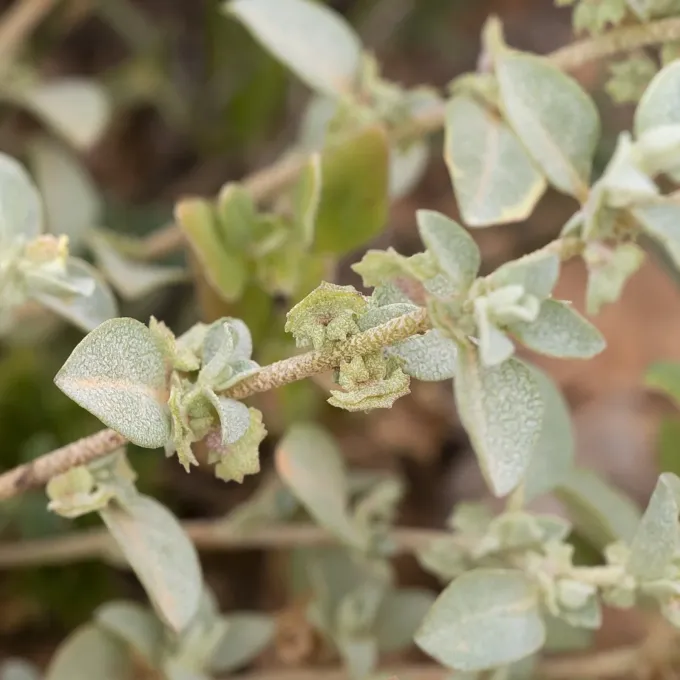
Atriplex eardleyae, commonly known as Eardley's saltbush, is a perennial subshrub within the Amaranthaceae family. Native to the arid zones of Australia, this plant has gained significant interest among agronomists for its potential in reclaiming saline soils and providing fodder in water-scarce environments.
The sowing process is typically timed to precede predictable seasonal rainfall. It is essential to ensure that seeds are lightly covered with soil to protect them from wind erosion while allowing for sufficient light penetration, which is vital for the germination of this halophytic species.
Growing requirements
This crop is distinguished by its extreme environmental adaptability. It thrives in soils characterized by high salt concentrations, effectively utilizing saline moisture that would be toxic to most conventional agricultural crops, making it a critical asset for sustainable land management.
Eardley's saltbush requires well-drained soil to prevent root asphyxiation. While it is highly drought-tolerant, its growth rate and biomass production are significantly enhanced in areas receiving moderate winter or spring rains, demonstrating a clear preference for full sun exposure throughout its development.
Agronomic management is generally low-input. Once established, the root system penetrates deep into the soil profile, helping to stabilize the ground and prevent erosion. Minimal fertilization is required as the plant is naturally adapted to nutrient-poor, alkaline soil conditions found in arid landscapes.
Main diseases and pests
While remarkably resistant to environmental stressors, the plant may face pressure from certain localized herbivorous insects. Furthermore, prolonged periods of waterlogging represent the primary threat to the crop, as it drastically increases susceptibility to root-rot pathogens and hinders the plant's natural saline-processing mechanisms.
Harvesting
The primary agricultural utility lies in forage production for livestock, particularly during the dry season when other pastures fail. The harvest approach involves rotational grazing or mechanical cutting, ensuring that the plant is not stripped to the ground, which allows for rapid recovery and regrowth.