
Enchylaena tomentosa
Enchylaena tomentosa
Description
Sowing dates
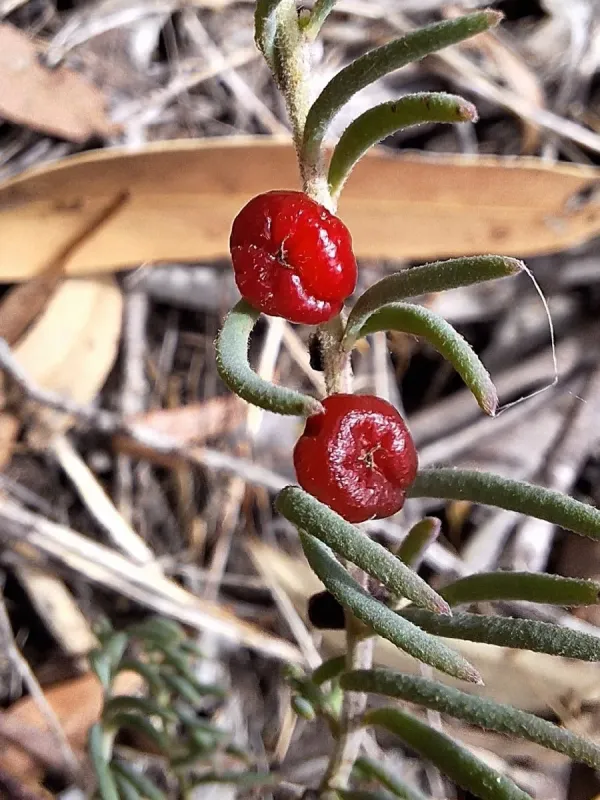
Enchylaena tomentosa, commonly known as ruby saltbush, is a perennial subshrub of the Amaranthaceae family, native to the arid regions of Australia.
Propagation is primarily achieved through seeds, which are sown in well-drained, sandy, or loam soils that mimic the natural harsh environment of the outback.
The optimal time for sowing is during the warmer months, as the seeds require sufficient soil temperature to initiate germination and rapid growth.
In professional cultivation, seeds should be sown at a shallow depth to ensure they are not smothered, allowing for optimal aeration and light exposure.
Cutting propagation is also a viable method, utilizing semi-hardwood stems to clone successful individuals, provided they are kept in a stable, protected environment.
Growing requirements
This species is highly adapted to extreme drought conditions, making it an excellent candidate for agricultural production in arid and semi-arid climates.
It thrives in saline soils where many other conventional crops would fail, showcasing its impressive capabilities as a hardy salt-tolerant halophyte.
Full sunlight is a critical requirement for development; the plant maintains its vigor and produces higher yields of berries under high solar radiation.
The soil must have excellent drainage, as waterlogging is the primary cause of decline and root rot in Enchylaena tomentosa populations.
Maintenance of appropriate spacing is necessary to allow for airflow, which reduces the risk of moisture-related pathogens within the dense foliage.
Yield
The agricultural value of this shrub lies in its role as a high-quality forage plant, providing essential nutrients and moisture for livestock during droughts.
The plant produces edible, succulent berries that are favored by both livestock and native fauna, significantly contributing to the biomass output.
Yield consistency remains stable throughout the season, even when water availability is low, making it a reliable source for sustainable pastoral systems.
Well-managed plots can support continuous grazing without degrading the stand, provided that the grazing intensity is monitored and controlled properly.
High levels of minerals within the plant tissue improve the nutritional profile of the livestock that consume it, enhancing overall herd health.
Main diseases and pests
Enchylaena tomentosa exhibits strong natural resistance to most common diseases, largely due to its evolutionary adaptation to hostile desert conditions.
Pests such as aphids or leaf-eating insects may occasionally affect younger, more succulent shoots, but rarely cause widespread damage to established plants.
Fungal issues, specifically root and crown rot, are the most significant threats, occurring almost exclusively when environmental management or drainage is poor.
Overgrazing by domestic or feral animals can lead to structural damage and the depletion of the plant's ability to store energy for future growth.
Because the plant is so well-adapted to its natural ecosystem, it rarely requires the application of pesticides, supporting organic farming practices.
Harvesting
Berries are typically harvested by hand when they reach their characteristic bright red or yellow color, signaling peak maturity and sweetness.
In large-scale agricultural operations, the primary harvest method is direct grazing, where animals forage on the leaves and succulent stems.
Mechanical harvesting of the forage biomass can be done using standard equipment, provided the cutting height is set to preserve the plant's woody framework.
Seed collection is performed after the fruit dries out, followed by mechanical winnowing to remove debris and achieve a clean, viable seed stock.
Harvested material must be stored in dry, cool conditions to prevent spoilage and maintain the structural and nutritional integrity of the plant biomass.