
Agriophyllum squarrosum
Agriophyllum squarrosum
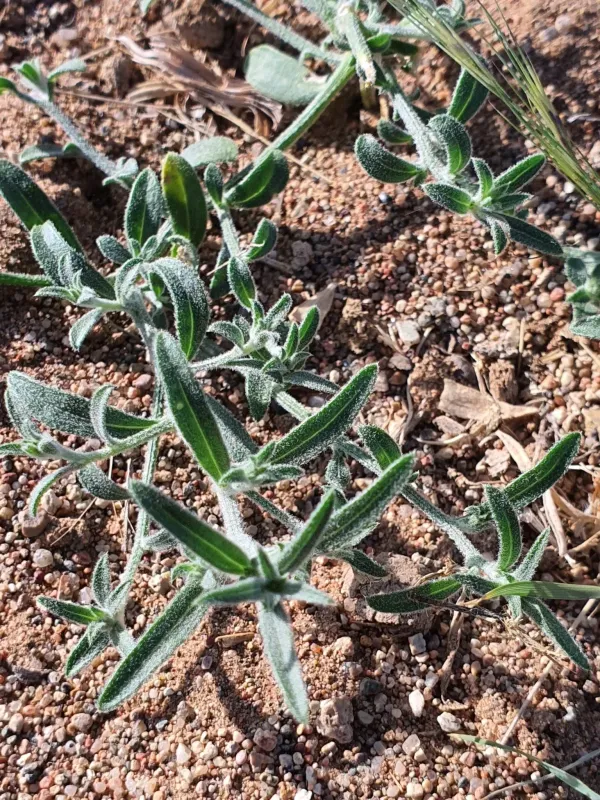
Description
Sowing dates
Agriophyllum squarrosum is an annual herbaceous plant belonging to the Amaranthaceae family, highly specialized for survival in desert and semi-desert environments. Sowing occurs in early spring, as soon as the soil warms up sufficiently to trigger germination and allow the seedlings to capture early seasonal moisture.
The seeds demonstrate high germination potential in loose, sandy substrates, which are typical for its native habitat. When cultivating this crop, agricultural machinery must be adjusted to accommodate shifting soil surfaces, with seeds planted at a depth of 2 to 4 centimeters to ensure stability against wind erosion.
As a psammophyte, this plant is vital for ecological restoration, particularly in projects involving sand dune stabilization. Sowing in strip patterns is a recommended technique that not only facilitates biomass production but also actively prevents the displacement of topsoil in degraded regions.
Seeding density is calibrated according to the intended use; higher densities are used for biomass harvesting, while lower densities are preferred for large-scale land rehabilitation. The rapid growth phase during the first few weeks allows the crop to outcompete native weeds early in the season.
Successful establishment relies heavily on timely planting, matching the short window of post-winter soil moisture. Once established, the robust root system enables the plant to access deep-seated water reserves, making it virtually immune to moderate surface-level droughts.
Growing requirements
This crop is exceptionally undemanding regarding soil fertility, thriving in poor, sandy, or loamy soils where few other crops survive. Agriophyllum squarrosum is remarkably salt-tolerant, allowing for its cultivation on saline lands that are traditionally considered unsuitable for conventional agriculture.
Access to direct, intense sunlight is the primary environmental requirement, as the plant is an obligate heliophyte. Any form of shading or high-density overcrowding significantly impairs its physiological processes and limits the development of its characteristic succulent-like vegetative mass.
The ideal climatic conditions feature hot, dry summers with high solar radiation levels, which stimulate the plant's metabolic functions. It is perfectly adapted to the extreme diurnal temperature fluctuations typical of desert climates, maintaining high vigor even when temperatures exceed typical comfort levels for other crops.
Proper drainage is essential to prevent the accumulation of moisture, which could otherwise lead to root rot. The high porosity of sandy soil structures provides excellent aeration, which is critical for supporting the rapid development of the root system and overall plant health.
Agriophyllum squarrosum does not require nitrogen or phosphorus fertilization, having evolved to utilize the minimal nutrients available in harsh desert soils. This natural efficiency significantly reduces production costs and aligns with sustainable agricultural practices.
Yield
The biomass yield of Agriophyllum squarrosum fluctuates based on the seasonal precipitation levels. In years with adequate spring rainfall, the plant produces substantial amounts of forage, which is highly valued for feeding camels, goats, and sheep in arid regions.
The productivity of the green mass can be sustained through controlled grazing or strategic mowing schedules that allow the plant to regenerate from basal buds. This adaptive growth pattern makes it an indispensable component of sustainable livestock management in desert ecosystems.
The nutritional quality, specifically the protein content, remains high throughout the primary growth phase. Research indicates that the dry matter provides a stable energy source, making it an excellent winter fodder option for livestock operations located in remote, arid pastoral regions.
Seed yield is also quite significant, allowing for natural self-reseeding on pastures. Proper timing for seed collection is crucial; harvesting should occur at full maturity before the seeds naturally disperse, ensuring a sufficient supply for future planting seasons or commercial seed distribution.
Modern mechanization can be applied to harvesting processes, increasing the overall economic viability of the crop. When managed correctly, the combination of biomass and seed collection provides multiple revenue streams for farmers operating in otherwise low-productivity territories.
Main diseases and pests
Due to its specialized evolution in extreme conditions, Agriophyllum squarrosum possesses a high level of natural immunity to common agricultural pests. Consequently, there is rarely a need for chemical pesticides or fungicides, ensuring the crop remains an ecologically safe source of fodder.
Occasional infestations of leaf-eating insects may occur during exceptionally warm springs, but these rarely reach economic injury levels. The plant's rapid maturation and structural thickness usually allow it to withstand such pressures without compromising the total yield of the field.
Natural abiotic threats like intense sandstorms can cause mechanical damage to young seedlings. However, mature plants utilize their anatomical features—such as specialized leaf structures—to withstand wind-borne particles, and the use of windbreaks further mitigates these environmental risks.
Competition from other xerophytic weeds can be a challenge during the seedling stage. Proactive field management, including periodic weeding of the young crop, is sufficient to guarantee a healthy, dense stand that eventually crowds out any unwanted competing vegetation.
The absence of significant pests makes this species a prime candidate for organic farming models. By avoiding heavy chemical applications, producers can maintain the biological integrity of the desert ecosystem while achieving consistent yields with minimal environmental footprint.
Harvesting
Harvesting for green fodder is most effective during the active flowering phase, when the plant mass is at its peak nutrient concentration but has not yet developed woody, lignified fibers. Mowing should be performed at a height of 10–15 centimeters to stimulate regrowth from the base.
After mowing, the material dries quickly in the field due to the arid climate, which preserves its nutritional value and prevents microbial spoilage. This rapid drying process is highly efficient and minimizes the time that the forage needs to remain exposed in the field.
For seed collection, the harvest must be timed precisely with full maturity to avoid shattering losses. Using combine harvesters with low-speed threshing drums ensures that the delicate seeds are harvested without mechanical injury, maintaining high germination rates for future use.
The stored fodder of Agriophyllum squarrosum exhibits excellent stability due to its adaptation to low-humidity environments. It is naturally resistant to mold and decay during storage, which simplifies logistics for remote livestock farms and reduces the need for expensive climate-controlled storage facilities.
Overall, the post-harvest handling of this crop is straightforward and requires minimal energy input. This simplicity, combined with its high fodder value, underscores the economic and practical importance of Agriophyllum squarrosum for arid-land agriculture and food security.