
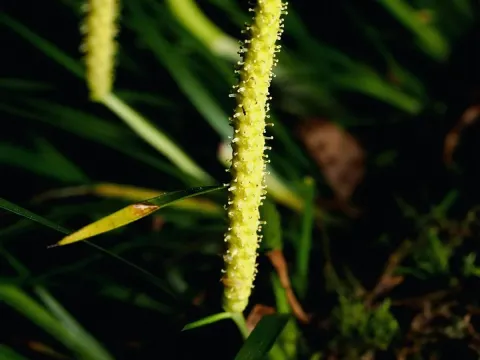
Grassy-leaved sweet flag
Acorus gramineus
Acorus gramineus, known as the grassy-leaved sweet flag, belongs to the Acoraceae family. Native to East Asia, this perennial plant is widely distributed in wetlands, swamps, and along the margins of freshwater bodies.
What the section contains
Grassy-leaved sweet flag
The plant thrives in consistently moist to wet soil conditions. In agricultural and horticultural settings, it is best suited for pond margins or bog gardens where its roots can stay saturated for extended periods.
Soil quality should be high in organic matter, providing the necessary nutrients for the development of its distinctive, fan-like, grass-like foliage. It prefers slightly acidic to neutral soil pH levels for optimal nutrient uptake.
Regarding climate, it is a hardy plant that appreciates moderate temperatures. While it can withstand some frost, in extremely cold zones, it is advisable to protect the rhizomes or move potted specimens indoors during winter.
Light requirements involve partial shade to full sun, provided there is enough moisture. In areas with intense summer heat, protecting the foliage from scorching direct midday sun is essential for maintaining aesthetic quality.
Acorus gramineus is generally resistant to major pests and diseases, making it a low-maintenance choice for both professional aquascaping and landscape design.
The most common pest is the spider mite, which may attack the plant if it is kept in dry indoor environments with poor air circulation.
In cases of poor water quality or stagnant conditions, root rot may occur if the substrate becomes anaerobic, which can be mitigated by ensuring proper water movement.
Aphids might occasionally colonize the young, tender leaves during the spring growing season, requiring standard horticultural intervention if infestations become significant.
Regular maintenance, including the removal of yellowing foliage, helps prevent the buildup of decaying organic matter that could attract opportunistic pests.