
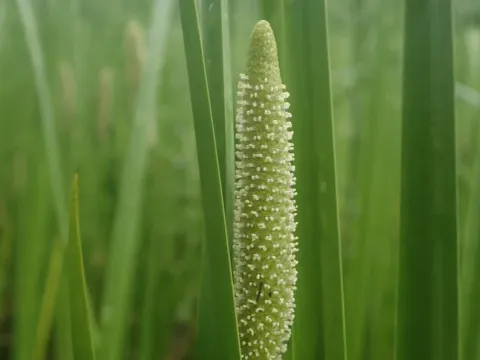
American sweet flag
Acorus americanus
American sweet flag (Acorus americanus) is a perennial wetland plant belonging to the Acoraceae family. Unlike its common relative, this species is native to North America and is primarily found in marshy habitats, riverbanks, and shallow pond margins.
What the section contains
American sweet flag
The plant requires consistently moist or saturated conditions to thrive. It is typically grown in shallow water, with optimal depths ranging from 10 to 30 cm. It can also be cultivated in boggy soil, provided that the substrate never dries out, as drought is detrimental to its growth.
Sunlight exposure is a critical factor for the development of American sweet flag. While it can tolerate partial shade, it performs best under full sun, which facilitates the vigorous development of its rhizomes and the synthesis of aromatic oils within the plant tissues.
Ideal growing conditions include nutrient-rich, silty or clay-heavy soils. The plant prefers neutral to slightly acidic pH levels. Incorporating organic matter into the substrate during the establishment phase can significantly improve biomass yield and plant health.
Commercially, the plant is valued for its rhizomes, which are used in the production of herbal medicines, aromatic compounds, and traditional flavorings. Additionally, it serves an important ecological role in water purification and erosion control along aquatic edges.
The primary threats to American sweet flag cultivation include fungal infections, particularly root rot, which may occur if the water becomes stagnant and oxygen levels in the substrate drop significantly. Maintaining water quality and preventing excessive organic buildup are key preventative measures.
Insect pests are generally not a major concern for Acorus americanus due to the presence of potent essential oils that act as natural repellents. However, in poorly managed plots, aphids or leaf-feeding beetles may occasionally be observed.
The harvest of rhizomes is typically carried out in late autumn when the plant becomes dormant. At this stage, the nutrient and oil concentration in the underground parts is at its seasonal peak, ensuring high-quality raw material for processing.
Harvested rhizomes must be cleaned of mud and fibrous roots, followed by immediate processing. Drying is performed in well-ventilated areas at controlled temperatures to prevent the loss of volatile compounds, which are essential for the plant's medicinal and commercial value.