
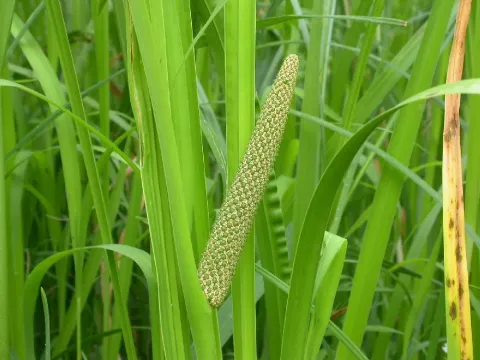
Sweet flag
Acorus
Propagation of sweet flag (Acorus calamus), a member of the Acoraceae family, is carried out exclusively through vegetative means by dividing the rhizomes. The optimal time for planting is early spring or early autumn, while the plant is in its dormant stage.
What the section contains

Sweet flag
Prepared rhizome segments, 15–20 centimeters in length, are planted at a depth of 10–15 centimeters in the substrate of a water body. It is essential that each segment includes several active buds to ensure high survival rates and rapid establishment of the crop.
In commercial cultivation, the planting density is typically about 4–5 plants per square meter of water surface. As the rhizomes expand, they quickly colonize the designated area, forming dense and robust plant communities.
Sweet flag is a perennial crop, meaning replanting is required only for establishing new plantations or rejuvenating older stands. The plant is vigorous and capable of dominating its habitat for many years if conditions are favorable.
When planting in artificial ponds, it is common to use planting baskets or mesh containers to control the spread of the rhizome system and prevent the plant from overgrowing the entire water area.
Sweet flag is a true hygrophyte that requires constant moisture and can grow submerged in water at depths of up to 30–50 centimeters. The crop prefers sunny, well-lit sites with silty or peat-rich soils that are abundant in organic matter.
The optimal temperature range for active growth is between 20 and 25 degrees Celsius. The plant is highly frost-hardy and can withstand severe winters, provided the rhizomes remain submerged beneath the water level, which protects them from freezing solid.
The plant is relatively undemanding regarding water chemistry, though it thrives best in neutral to slightly acidic substrates. It is crucial to have standing or slow-moving water, as strong currents can prevent the rhizomes from anchoring properly.
The plant is renowned for its specific fragrance, caused by high levels of essential oils, which contributes to its resilience against environmental stressors. The accumulation of secondary metabolites is directly linked to light intensity and temperature during the growing season.
Sweet flag does not tolerate drying out, so if grown along shorelines, regular watering or proximity to the water table is mandatory. During drought periods, growth slows significantly, which negatively impacts the final biomass yield.
Productivity is measured by the output of fresh and dry rhizomes. The yield of a plantation reaches its peak in the 3rd or 4th year after planting, once the root system has fully colonized the substrate and accumulated the desired biological compounds.
On average, a well-managed plantation can produce between 3 and 6 tons of dry raw material per hectare. The yield depends heavily on planting density, the quality of the bottom sediments, and the nutrient availability in the water.
The quality of the final product is defined by the content of essential oil and the bitter glucoside acorin. High-quality rhizomes should have a white or pinkish interior and a pungent, spicy odor, indicating proper harvesting and drying techniques were employed.
To enhance yields in commercial setups, it is recommended to clear the water body of competing vegetation such as cattails or reeds, which can suppress sweet flag growth. Regular maintenance in the early years significantly improves total output.
The economic viability of sweet flag also includes utilizing the foliage, which can serve as an organic fertilizer or fodder additive. The multi-purpose potential of the biomass makes it an attractive crop for integrated water management systems.
Sweet flag is generally a resilient plant; however, it can be susceptible to fungal infections under poor environmental conditions. The most common issues are root rots, which occur due to poor aeration or stagnant water in unsuitable soil types.
Pests rarely cause critical damage to sweet flag plantations, but occasional damage to the leaves by phytophagous insects, such as certain beetles or lepidopteran larvae, may occur. These are usually not life-threatening to the plant.
A significant threat to younger plantations is wildlife such as muskrats or water rats, which feed on the succulent rhizomes. To protect the crops, physical barriers like metal mesh are often installed around the planting zone to deter herbivores.
Interspecific competition from aggressive aquatic plants is a biological factor that requires management. Furthermore, because sweet flag actively bioaccumulates heavy metals, it should not be grown in polluted water bodies intended for medicinal harvest.
Maintaining phytosanitary control is essential when growing in monoculture, including the timely removal of affected plants. Disease prevention centers on maintaining optimal plant spacing and ensuring adequate water circulation around the root zone.
Harvesting sweet flag rhizomes is performed in the autumn (September-October), as the foliage begins to yellow and die back. During this time, the concentration of essential oils and other active components in the rhizomes is at its maximum.
The harvesting process involves digging the rhizomes from the silt or mud and cleaning them thoroughly to remove leaves, rootlets, and debris. Mechanical rakes or specialized forks are used to carefully lift the root system from the bottom sediment.
Freshly harvested rhizomes must be washed immediately with running water. Rapid cleaning is essential to prevent decay and the growth of mold or bacteria on the damp surfaces, which would compromise the quality of the raw material.
Drying is carried out in controlled conditions at 30–40 degrees Celsius or in well-ventilated sheds shielded from direct sunlight. The rhizomes are considered properly dried when they snap cleanly rather than bending when subjected to pressure.
Storage of the final product requires a dry, cool, and well-ventilated area. Sweet flag is highly hygroscopic, so containers must be moisture-proof to prevent loss of fragrance and to protect the stored material from pests.