
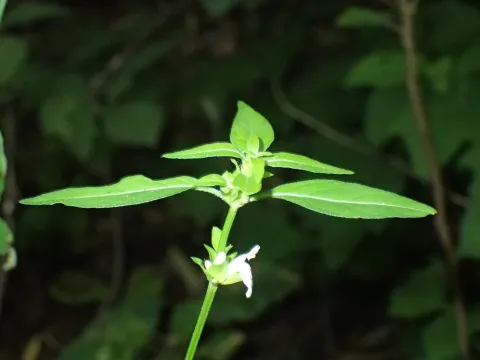
Justicia striata
Justicia striata
Justicia striata, a member of the Acanthaceae family, originates from tropical African regions. In non-tropical agricultural settings, this crop is strictly cultivated in controlled greenhouse environments or indoor facilities to protect it from cold stress.
What the section contains
Justicia striata
The optimal sowing time is late winter or early spring, which aligns with the increasing day length and helps ensure vigorous early seedling development. Early sowing allows plants to establish a robust root system before the peak growth period.
Seeds should be sown on the surface of a light, well-draining, peat-based substrate. Since the seeds are light-dependent for germination, they should not be buried deep, but rather pressed gently into the growing medium.
A stable temperature range between 22 and 24 degrees Celsius is required for successful germination. Maintaining high humidity using a plastic cover or a propagation dome during the initial stage is essential for uniform seedling emergence.
Once true leaves appear, seedlings are transplanted into individual containers. It is critical to manage this stage with care to prevent damaging the sensitive root hairs, which can lead to transplant shock and inhibited growth.
This crop requires nutrient-rich, permeable soil with a slightly acidic to neutral pH. A mix of organic compost, leaf mold, and coarse sand provides an ideal structure that balances moisture retention with necessary soil aeration.
Justicia striata thrives in bright, indirect light. While it prefers high light intensities for maximum growth, direct sunlight during the middle of the day can cause leaf chlorosis and scorch, necessitating the use of shading nets in greenhouses.
High relative humidity, typically between 60% and 75%, is necessary to simulate its natural tropical habitat. Automated misting systems or the use of humidifiers are highly recommended to prevent leaf curling and wilting.
Irrigation management is crucial; the substrate should remain consistently moist but never waterlogged. Excessive soil moisture triggers root suffocation and promotes the development of anaerobic conditions that foster pathogenic fungi.
Regular fertilization with balanced N-P-K liquid fertilizers is required during the vegetative phase. Applying nutrients every two weeks encourages the production of the leafy biomass, which is the primary objective of its cultivation.
The economic value of Justicia striata is largely attributed to its medicinal properties, widely utilized in traditional phytotherapy. Yield is primarily determined by the volume and quality of the aerial parts harvested throughout the cycle.
Strategic pruning and topping of the apical meristems are standard agricultural practices to stimulate lateral branching. This technique increases the density of the canopy and significantly boosts the final biomass yield per plant.
Consistent growth and replenishment of foliage are possible if the plant receives adequate nutrient supply and optimized photoperiod conditions. Intensive management allows for multiple harvests from the same stock plants over a single season.
Yield metrics are positively correlated with the plant's age and health status. Older, well-maintained specimens with developed root systems tend to produce more biomass than younger plants during the same harvesting interval.
Vertical farming methods, such as tiered shelving in climate-controlled greenhouses, are becoming an efficient way to increase the total productivity of Justicia striata in limited production spaces.
Spider mites are the most common pest, especially in dry greenhouse conditions. They thrive in low humidity and can quickly debilitate the plant by feeding on the sap, leading to premature leaf drop and stunted development.
Whiteflies pose a significant threat due to their rapid reproductive rate. Integrated pest management, including the use of yellow sticky traps and the introduction of biological predators, is essential for maintaining a healthy crop.
Powdery mildew and various fungal leaf spots often occur when airflow is restricted. Ensuring adequate ventilation and maintaining proper plant spacing are effective cultural practices for preventing these fungal outbreaks.
Root rot, often caused by Pythium or Phytophthora species, is linked to poor soil drainage and irrigation mismanagement. Preventing standing water and using sanitized equipment are the primary strategies for mitigation.
Rigorous sanitation protocols within the growing area are necessary to limit the spread of pathogens. Removing diseased tissue immediately and sterilizing tools prevents the cross-contamination of healthy plants in the cultivation cycle.
Harvesting involves the careful excision of mature aerial stems. Sharp, sterilized pruning shears are essential to ensure clean cuts, which helps minimize the risk of infection and promotes faster wound healing.
The best time for harvesting is early morning, when the plant's turgor pressure is high and the concentration of secondary metabolites is typically at its peak, ensuring maximum therapeutic quality in the final product.
After collection, the plant material must be dried in a dark, well-ventilated space. Exposure to direct light must be avoided to prevent the degradation of heat-sensitive and light-sensitive active compounds.
Drying continues until the stems become brittle. This process requires monitoring to ensure the material reaches the correct moisture content, preventing the risk of microbial growth or mold during the storage phase.
Once dried, the product should be stored in opaque, airtight containers. Maintaining these storage conditions protects the medicinal material from humidity, light, and oxidation, preserving its potency for subsequent use.