
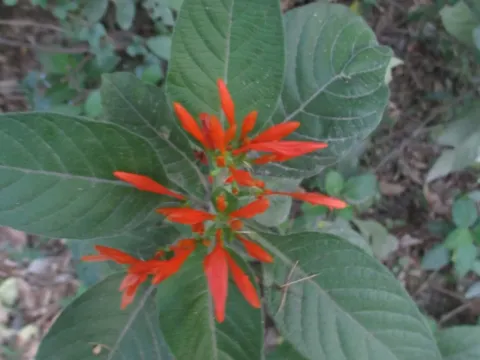
Justicia spicigera
Justicia spicigera
Justicia spicigera, commonly known as the Mexican honeysuckle, belongs to the Acanthaceae family. This evergreen shrub is native to tropical regions of Central and South America, particularly Mexico, where it grows in varied climates.
What the section contains
Justicia spicigera
The plant thrives in well-draining, fertile soil with a neutral to slightly acidic pH. It is generally adaptable to different soil types, but it is strictly intolerant to waterlogging, which quickly leads to root rot and other fatal conditions.
For optimal growth, the species requires warm temperatures and bright, indirect light. While it can handle partial shade, a high level of ambient light is essential for the plant to produce its characteristic vibrant orange-red tubular flowers throughout the season.
In non-tropical climates, Justicia spicigera is typically cultivated in greenhouses or as a container plant. It lacks frost tolerance, requiring relocation to a controlled, indoor environment whenever temperatures drop below 10 degrees Celsius.
Standard cultivation techniques involve consistent watering during the peak growing season and balanced mineral fertilization. Regular pruning is necessary to maintain a compact form and to stimulate the development of new flowering stems.
The economic value of Justicia spicigera is primarily found in the pharmaceutical and ornamental sectors. The leaves are traditionally used in folk medicine to produce extracts and natural dyes, reflecting the plant's long history of human interaction.
Industrial yields depend significantly on planting density and environmental control. When managed in professional nurseries, the shrub can reach heights of up to 1.5 meters, providing a steady supply of high-quality plant biomass for specific medicinal applications.
In the ornamental trade, the plant is valued for its long blooming period and its ability to attract pollinators in greenhouse settings. Skilled growers use pruning to manage flowering cycles, ensuring availability throughout the year.
Propagation is most efficiently achieved through stem cuttings, which ensure the consistent quality of the stock. Rooting is successfully triggered under conditions of high humidity and a stable soil temperature ranging between 22 and 25 degrees Celsius.
Harvesting of the foliage is conducted during the phases of peak vegetative growth. Proper drying in shaded, airy rooms is essential to preserve the bioactive compounds in the leaves, ensuring that the final product maintains its intended efficacy.
The primary pests affecting Justicia spicigera in protected environments are spider mites and whiteflies. These insects proliferate in low-humidity conditions, causing significant damage to the leaf structure and reducing the plant's overall vigor.
Excessive moisture within the growing medium often leads to fungal pathogens, manifesting as root rot or leaf spots. Effective management relies on proper drainage protocols and active air circulation to minimize the risk of infection.
Integrated pest management, including the use of insecticidal oils and soaps, is recommended to control populations while avoiding harmful chemicals. This is particularly important for plants intended for medical extract production.
Strict sanitation protocols for pruning tools are mandatory to prevent the transmission of diseases between plants. Any symptomatic tissue should be immediately isolated and destroyed to safeguard the health of the remaining crop.
Maintaining a healthy, stress-free growing environment is the best defense against pests and diseases. Providing the correct balance of light, moisture, and nutrition significantly enhances the natural resilience of the species.