
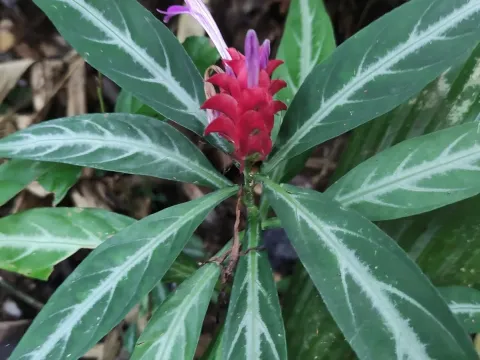
Justicia scheidweileri
Justicia scheidweileri
Justicia scheidweileri is a perennial evergreen herbaceous plant belonging to the Acanthaceae family. Originating from the tropical regions of South America, this species thrives in the understory of forest environments, where it has adapted to low-light conditions and high humidity.
What the section contains
Justicia scheidweileri
Botanically, it is known for its distinct foliage, which features silver-grey veins against dark green leaves. The plant exhibits a compact growth habit, making it a highly desirable specimen for ornamental horticulture and interior plantscapes.
Regarding climatic requirements, the plant prefers consistent temperatures between 20°C and 25°C. It is highly sensitive to cold drafts and significant temperature fluctuations, which can negatively impact its growth rate and leaf integrity.
The soil must be nutrient-rich, airy, and well-drained. A typical substrate should consist of a mix of leaf mold, peat, and coarse sand or perlite, ensuring that the root system receives adequate oxygen while retaining necessary moisture.
Agrotechnical management requires avoiding direct sunlight. In a cultivation environment, it is best to place the plants in areas with bright, filtered light to preserve the natural variegation of the leaves and prevent scorching of the foliage.
The main pests affecting Justicia scheidweileri include spider mites, mealybugs, and scale insects. These pests often thrive in conditions with low atmospheric humidity, necessitating regular misting and monitoring to prevent infestations.
Root rot is the most common disease encountered during cultivation, typically resulting from overwatering or poorly draining soil. To mitigate this risk, it is essential to allow the top layer of the soil to dry out slightly before re-watering.
Fungal infections can manifest as leaf spots, which are often exacerbated by poor air circulation. Improving ventilation around the plants can significantly reduce the risk of pathogen development in greenhouse or indoor settings.
Environmental stress, including exposure to sudden cold snaps, may lead to leaf drop. Maintaining a stable microclimate is crucial for the overall health and vigor of the specimen throughout the year.
Regular maintenance, including the removal of dead tissue and proper fertilization during the active growing season, is recommended. A healthy, well-nourished plant demonstrates greater resilience against common botanical pests and infections.