
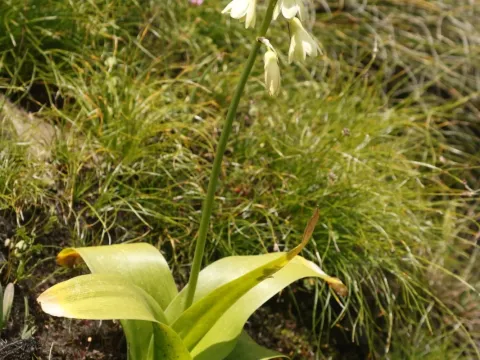
Galtonia
Galtonia
Planting Galtonia bulbs in open ground is carried out in the spring once the soil has warmed up sufficiently, usually in late April or May. In regions with milder climates, autumn planting is possible but requires reliable protection against freezing temperatures.
What the section contains
Galtonia
The planting depth depends on the size of the bulb and the type of soil, generally ranging from 10 to 15 centimeters. When planting, it is important to maintain a spacing of approximately 25–30 centimeters between plants to ensure adequate air circulation.
To accelerate flowering in regions with short summers, practitioners often pre-start the bulbs in pots starting in March. This allows the plant to adapt to outdoor conditions faster and bloom 2–3 weeks earlier than usual.
The choice of planting location should focus on well-lit areas protected from strong winds. Galtonia tolerates light shade, but in bright sunlight, its flower spikes develop to be more vigorous and taller.
When propagating by seed, sowing is done in seed trays in early spring. Seedlings develop slowly and require transplanting, and full flowering of young plants typically occurs only in the third or fourth year after sowing.
Galtonia is a member of the Asparagaceae family, native to South Africa. The crop prefers fertile, well-drained loamy soils with a neutral or slightly acidic soil reaction.
The plant has a strong requirement for regular and abundant watering during the active growth period. Drying out of the root zone negatively impacts the quality of the flower spikes and can lead to premature yellowing of the leaves.
The plant has high nutritional requirements regarding soil organic matter, so incorporating well-rotted compost or complex mineral fertilizers is a prerequisite for obtaining high-quality inflorescences.
Galtonia is not cold-hardy in temperate climates. At temperatures below freezing, the bulbs must be lifted and stored in a cool, dry place until the next season.
- Soil: light, loose, rich in humus.
- Watering: intense during the flowering period.
- Lighting: bright, full sun.
- Protection: mulching is necessary in southern regions.
The economic use of Galtonia is focused exclusively on ornamental gardening and landscape design. The crop is valued for its tall, raceme-like inflorescences consisting of numerous white, bell-shaped flowers.
The productivity of the plant is measured by the number of flower spikes and the duration of flowering, which lasts from mid-summer until early autumn. One plant can produce up to 3–5 robust flower stalks simultaneously.
Propagation by daughter bulbs is the primary method of obtaining planting material. In one season, a mature bulb can produce 2–3 healthy offsets, allowing for the rapid expansion of the population in the garden.
Cut Galtonia flowers are used in floristry to create vertical accents in bouquets. Due to the dense structure of the stem, the flowers remain fresh in a vase for up to 10–14 days with regular water changes.
The multiplication rate of the culture depends on the agronomic practices and proper winter storage of the planting material. Maintaining the correct temperature during the dormant period ensures maximum germination and productivity of the bulbs in the future season.
The main pests of Galtonia are onion mites and thrips, which can damage the bulb tissues during storage. For prevention, it is recommended to treat the planting material with insecticides before placing it in winter storage.
Excessive soil moisture during the dormant period or poor drainage often lead to the development of fungal diseases, such as gray mold and Fusarium wilt. These pathogens are capable of destroying the bulb quickly.
Slugs and snails can cause damage to young leaves in the spring by eating the edges of the leaf blades. Control involves manual collection or the use of specialized granular baits around the plantings.
Viral infections, manifested as leaf mottling or mosaic patterns, are incurable. Affected specimens must be removed from the site immediately and disposed of to prevent the spread of the disease to healthy plants.
Proper agronomic practices, including disinfecting bulbs before planting and adhering to crop rotation, help to minimize the risks of disease development and the loss of ornamental stock.
The harvesting of Galtonia bulbs is carried out after the above-ground part of the plant has naturally yellowed and withered under the influence of the first autumn frosts. Harvesting too early prevents the accumulation of nutrients in the bulb.
After lifting, the bulbs are cleaned of soil residues, dried in a place protected from direct sunlight, and old roots are removed. It is important not to damage the basal plate, as wounds can act as entry points for infection.
Storage is performed in well-ventilated rooms at temperatures between 5 and 10 degrees Celsius. It is best to use boxes filled with peat, sand, or sawdust to prevent the outer scales from drying out and shriveling.
During the sorting of planting material, only mature and healthy bulbs should be kept, discarding specimens showing signs of rot or mechanical damage. This ensures minimal losses during the winter period.
Periodic inspection of stored bulbs during winter allows for timely detection of mold growth, facilitating the re-application of fungicides or the sorting of material to preserve the integrity of the entire batch.