
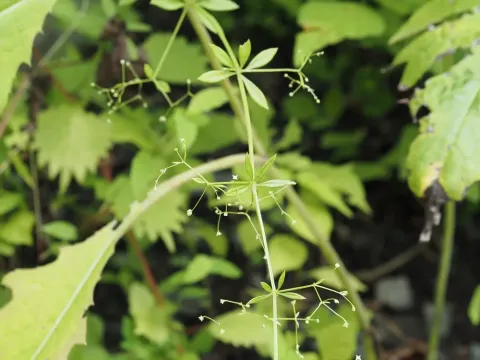
Galium pseudo-asprellum
Galium pseudo-asprellum
Galium pseudo-asprellum belongs to the Rubiaceae family and requires careful site selection to ensure successful crop establishment.
What the section contains
Galium pseudo-asprellum
The optimal sowing time is early spring, once the soil has warmed up sufficiently to support seed germination and root initiation.
Due to the small size of the seeds, they should be sown at a shallow depth of approximately 1 to 2 centimeters to ensure access to oxygen and light.
Rolling the soil surface immediately after sowing improves seed-to-soil contact, which is crucial for achieving uniform field emergence.
Once seedlings appear, they develop into rosettes, allowing the plants to establish a strong foundation before the main stem elongation phase.
This crop thrives in fertile, well-drained loamy soils with a neutral pH, avoiding compacted or waterlogged areas at all costs.
Abundant sunlight is required to maximize photosynthetic efficiency and promote the development of robust, high-quality vegetative biomass.
Moderate temperatures, ranging between 18 and 22 degrees Celsius, provide the ideal conditions for steady and healthy vegetative growth.
Regular moisture is necessary, particularly during the rapid growth phase, but it must be balanced to prevent fungal pathogens in the root zone.
Strategic fertilization with phosphorus and potassium is recommended to strengthen the stalks and improve overall plant structural integrity.
Biomass production is highly dependent on effective crop management and the level of nutrient availability within the soil profile.
Maximum yields are typically achieved by harvesting during the peak flowering stage when nutritional concentrations are at their highest.
Effective irrigation management during dry periods can significantly boost the overall yield potential and quality of the harvested material.
Plant density plays a vital role; appropriate spacing ensures that individual plants receive enough light and nutrients to reach their full potential.
Proper harvest intervals allow for multiple cuttings per season, maximizing the utilization efficiency of the land under optimal conditions.
Leaf-feeding insects such as beetles and caterpillars represent the primary biological threats that can damage the crop's foliage.
High humidity conditions may lead to fungal outbreaks, such as powdery mildew, which can significantly reduce the marketable quality of the crop.
Weed management is critical in the early stages of development, as the crop is vulnerable to competition from more aggressive wild species.
Root-damaging nematodes pose a persistent threat, often causing stunted growth and yellowing of the leaves in infested fields.
Implementing a diverse crop rotation strategy is the most effective way to manage and reduce the pressure from soil-borne pathogens and pests.
The harvesting process should be timed to coincide with the onset of flowering to capture the plant at its highest nutritional value.
Adjusting the cutter bar height ensures that the harvest is clean and minimizes soil contamination within the collected plant material.
Rapid drying of the biomass is essential to preserve its quality and prevent nutrient degradation caused by moisture or prolonged sunlight.
Proper storage in a dry, ventilated facility is required to maintain the stability of the crop until it is processed or used for its end application.
Cleaning and disinfecting machinery after harvest is a vital best practice to prevent the carryover of pathogens between different field sections.