
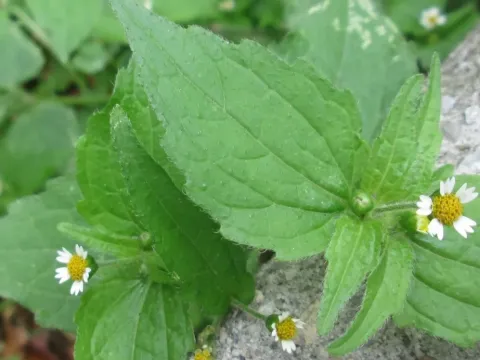
Galinsoga urticaefolia
Galinsoga urticaefolia
Galinsoga urticaefolia is an annual herbaceous plant of the Asteraceae family that naturally colonizes arable land during the spring season.
What the section contains
Galinsoga urticaefolia
The germination of its seeds typically begins when soil temperatures reach 8 to 10 degrees Celsius, allowing the plant to emerge rapidly in early spring.
Due to its short life cycle, the plant can produce several generations within a single growing season, making it a persistent presence in many fields.
The staggered germination pattern of the seeds ensures that the population remains dense throughout the summer months under favorable conditions.
Agronomic planning must account for the plant's aggressive growth speed, often necessitating repeated tillage or herbicide applications throughout the season.
This species thrives in nutrient-rich, moist, and loose soils, commonly appearing in gardens, vegetable fields, and cultivated horticultural areas.
It prefers sunny, well-lit environments, although it can tolerate partial shade if moisture and soil nitrogen levels are sufficiently high.
The plant is highly responsive to the availability of organic matter in the soil, which correlates with its role as a fast-growing opportunistic species.
It adapts well to various soil types, excluding extremely waterlogged or desert-like environments, which limit its germination and growth rates.
Stable moderate temperatures are ideal for its development, and it exhibits high sensitivity to frost, which usually terminates its life cycle in late autumn.
As a robust weed, Galinsoga urticaefolia competes aggressively with crops for water, mineral nutrients, and solar radiation, reducing overall yields.
The plant can act as an alternative host for various agricultural pests, including aphids and spider mites, which migrate to nearby commercial crops.
Fungal pathogens such as powdery mildew can infect the plant, posing a risk of spread to susceptible cash crops grown in the immediate vicinity.
Soil-borne nematodes can colonize its root system, potentially building up populations that may impact subsequent plantings in the field.
Effective management requires integrated pest control measures, emphasizing mechanical weeding before the onset of the flowering and seed-set stages.
Harvesting for medicinal or nutritional applications must occur during the peak flowering stage to ensure the highest concentration of bioactive compounds.
Collection should be performed manually or with standard harvesting equipment, ensuring that no mature seeds are left in the field during the process.
Post-harvest handling involves rapid drying to maintain the quality of the plant material and prevent the development of harmful fungal growth.
Storage should be conducted in climate-controlled environments to preserve the chemical integrity of the harvested green biomass.
If utilized as green manure, the plants must be incorporated into the soil before the reproductive phase to avoid re-seeding the field.