
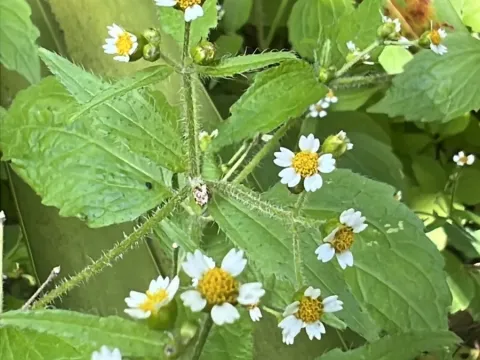
Galinsoga caracasana
Galinsoga caracasana
Galinsoga caracasana, commonly known as a member of the Asteraceae family, is a prolific annual herb. In agricultural contexts, it is classified as a troublesome weed that competes intensely with crops for nutrients, space, and moisture in cultivated fields and gardens.
What the section contains
Galinsoga caracasana
The species originated in tropical South America, specifically near Caracas, Venezuela. Over time, it has spread globally, successfully adapting to diverse environments, particularly those with disturbed soils and high fertility, where it often outcompetes local flora.
Botanically, the plant features branched stems and opposite leaves. Its small flower heads consist of both ray and disc florets, which contribute to a massive seed production capacity. A single plant can produce thousands of seeds, ensuring a robust soil seed bank.
The plant thrives in moist, nitrogen-rich environments. It is highly opportunistic, often establishing itself in vegetable rows and orchards where irrigation and fertilization create ideal growing conditions. Its rapid growth cycle allows for multiple generations per year.
From an agronomic perspective, managing this weed requires proactive soil tillage and competitive crop planting. Because the seeds are easily dispersed, maintaining sanitation around field margins is essential to prevent re-infestation after weeding operations.
The primary economic threat posed by Galinsoga caracasana is the reduction of crop yields. By occupying field space early in the season, it denies essential resources to young crops, leading to stunted development and significant economic losses for farmers.
Beyond competition, the plant serves as a host for various phytopathogens. It can harbor viruses and fungal diseases that affect sensitive crops such as potatoes and tomatoes, necessitating additional phytosanitary measures in integrated pest management programs.
Insect pests often use this weed as a bridge or refuge during the growing season. This creates a cycle where pests move from the weed to the crops, complicating chemical control strategies and potentially increasing the total costs of plant protection products.
Mechanically, control is hindered by the plant's regenerative capabilities. When partially uprooted, the plant can re-establish itself in moist conditions. Deep cultivation or the timely application of systemic herbicides is often required to achieve effective suppression.
For sustainable control, it is recommended to employ a combination of cultural practices, such as cover cropping and mulching, along with precise herbicide applications. This multi-layered approach helps minimize the pressure from this aggressive invasive species.