
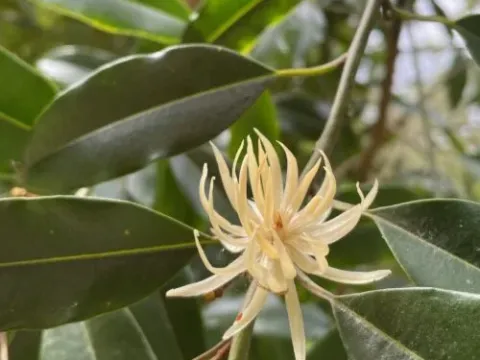
Galbulimima
Galbulilima
Galbulimima is a genus of evergreen trees belonging to the small botanical family Himantandraceae. These plants are native to the tropical rainforests of New Guinea, the Moluccan Islands, and parts of tropical northeastern Australia, thriving in warm and humid environments.
What the section contains
Galbulimima
The plant requires consistently high temperatures and high levels of atmospheric humidity to survive. It naturally occurs in fertile, well-draining soils that are rich in organic debris, typical of the forest floor and understory layers within primary tropical rainforest ecosystems.
Botanically, Galbulimima is noted for its distinctive, leathery leaves and flowers covered with small scales, lacking a standard perianth. The growth habit is slow, and the tree typically develops a dense, spreading canopy that is well-adapted to the low-light conditions of its native habitat.
While the bark and leaves are known to contain alkaloids used traditionally by indigenous peoples, Galbulimima is not considered an agricultural crop in the commercial sense. Cultivation of the species is extremely restricted, generally limited to specialized botanical gardens and conservation research facilities.
There are no standardized agronomic practices for this species, as it is highly sensitive to environmental stressors. Successful cultivation requires strict adherence to mimicking a primary rainforest microclimate, including careful light management and the maintenance of constant, high moisture levels throughout the growing season.