
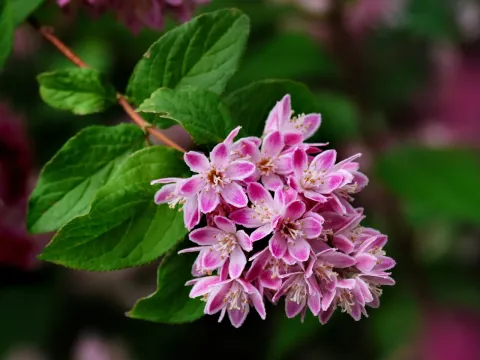
Deutzia compacta
Deutzia compacta
Deutzia compacta is a charming deciduous shrub belonging to the Hydrangeaceae family. Known for its small stature and dense growth habit, it is highly valued in horticulture for its beautiful clusters of flowers that bloom in late spring and early summer.
What the section contains
Deutzia compacta
Originating from the mountain regions of China, this plant has adapted well to various temperate climates. In cultivation, it is widely recognized for its ability to maintain a tidy shape with minimal pruning, making it ideal for smaller gardens and landscapes.
The shrub thrives in locations with full sun to light shade, provided it is protected from harsh, drying winds. It requires fertile, well-draining soil with a slightly acidic to neutral pH to support optimal growth and flower production.
Consistent moisture is crucial for Deutzia compacta, particularly during the active growing season. While it prefers moist soil, it is essential to ensure that water does not pool around the roots to prevent damage from waterlogging.
In landscaping, this species is typically used as a decorative specimen in mixed borders, as a low foundation planting, or in containers. Its versatility allows it to serve as both a focal point and a structural element in garden designs.
Deutzia compacta can be susceptible to typical garden pests, including aphids and spider mites, which may weaken the plant if left untreated. Regular inspection is recommended to detect infestations early.
Fungal diseases, such as leaf spot or powdery mildew, can occur when the shrub is planted in areas with poor air circulation or excessive soil humidity. Maintaining proper space between plantings is essential for health.
Pruning should be done carefully to remove dead or diseased branches, which helps to minimize the accumulation of pathogens within the shrub's canopy.
During dry summer months, drought stress may leave the plant more vulnerable to insect attacks, so maintaining a consistent watering schedule is a vital part of pest management.
Using integrated pest management (IPM) practices, such as encouraging beneficial insects or using organic insecticidal soaps, can effectively control common threats without harming the environment.