
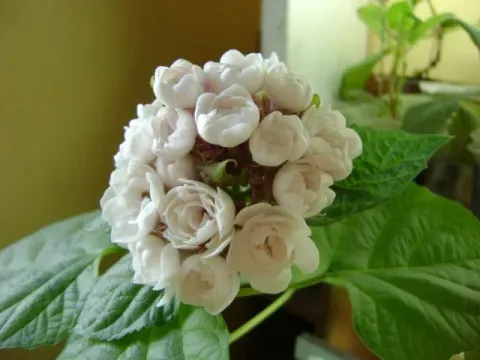
Chinese glorybower
Clerodendrum chinense
Clerodendrum chinense, widely known as Chinese glorybower, belongs to the Lamiaceae family. It is a perennial evergreen shrub native to the tropical forests of Southeast Asia, characterized by its fragrant, dense clusters of flowers.
What the section contains
Chinese glorybower
This species thrives in high temperatures, ideally ranging between 20°C and 28°C. Being a tropical plant, it cannot withstand freezing temperatures and is typically grown in controlled greenhouse environments or indoor settings in cooler climates.
The culture requires a well-draining, nutrient-rich soil mix. A combination of organic peat, leaf mold, and horticultural sand provides the necessary aeration and moisture-retentive properties for its vigorous root system.
High humidity levels are essential for this plant. To simulate its native tropical habitat, growers should maintain humidity above 60% and ensure regular watering, allowing the top inch of soil to dry out slightly before the next irrigation.
Lighting should be bright but filtered. Prolonged exposure to direct, harsh sunlight can damage the leaves, while insufficient light often leads to stunted growth and failure to produce the characteristic aromatic inflorescences.
Spider mites represent a primary pest threat, particularly in warm, dry environments. They cause stippling and yellowing of the foliage, which can eventually lead to leaf drop if left unchecked.
Mealybugs are another common challenge, often hiding in the crevices of stems and leaf axils, producing a characteristic white, waxy substance that disrupts plant development.
Integrated pest management, including regular inspection and the use of horticultural oils or insecticidal soaps, is the recommended strategy for maintaining plant health.
Root rot is the most serious physiological disorder associated with overwatering or poor substrate drainage, which prevents proper oxygenation of the roots.
Proper sanitation, including the removal of dead leaves and maintaining adequate airflow around the plant, significantly reduces the incidence of fungal pathogens and secondary infections.