
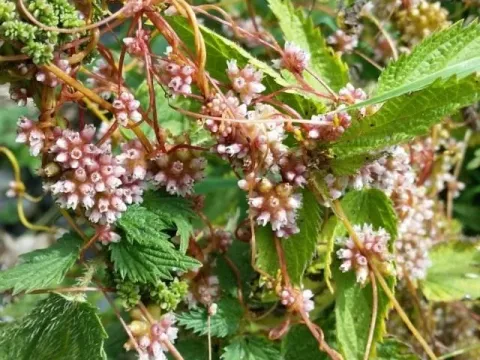
Chinese dodder
Cuscuta sinensis
Chinese dodder (Cuscuta sinensis) is a parasitic plant belonging to the Convolvulaceae family. It is unique due to its complete lack of chlorophyll and traditional root system, relying entirely on host plants for water, minerals, and synthesized nutrients through specialized organs called haustoria.
What the section contains
Chinese dodder
Native to East Asia, this species has spread to various climates, typically inhabiting areas with abundant light and favorable moisture levels. It thrives in agricultural fields, attaching itself to both wild vegetation and various crops, significantly impacting their growth and development.
The climate requirements for Cuscuta sinensis involve warm temperatures, typically ranging from +20°C to +30°C, and sufficient soil moisture for successful germination. The seeds are remarkably resilient, capable of remaining dormant in the soil seed bank for years until favorable conditions emerge.
Agronomic management focuses heavily on preventing the introduction of seeds into clean fields. Since the seeds are extremely small, they often contaminate commercial seed lots. Strict seed testing and certification programs are essential to maintain the integrity of agricultural production.
In infested areas, crop rotation is a primary strategy. By alternating with non-host crops, farmers can disrupt the life cycle of the dodder. Additionally, deep tillage and early-season mechanical weed removal are effective practices to suppress the parasite before it can establish a strong connection to the host.
The parasitic nature of Chinese dodder poses a significant threat to agricultural productivity. By siphoning nutrients, it causes severe chlorosis, stunted growth, and death of the host plants, which translates into substantial yield losses and potential total crop failure in heavily infested patches.
Furthermore, Cuscuta sinensis acts as a vector for various plant pathogens, including viruses and phytoplasmas. The haustoria provide a direct bridge for disease transmission between infected and healthy plants, significantly increasing the risk of widespread viral epidemics in fields.
Managing the weed is difficult because it is physiologically integrated with the host. Many broad-spectrum herbicides may damage the host crop while trying to control the parasite. Therefore, selective herbicide application or precise contact sprays are required during the early stages of infection.
Biological control research explores the use of natural enemies, such as insects and fungi, that specialize in consuming or parasitizing the dodder itself. While promising, these methods often require specific environmental conditions and integrated pest management systems to be fully effective.
- Seed cleaning and inspection.
- Use of certified crop varieties.
- Prompt removal of infested host plants.
- Sanitation of agricultural machinery.