
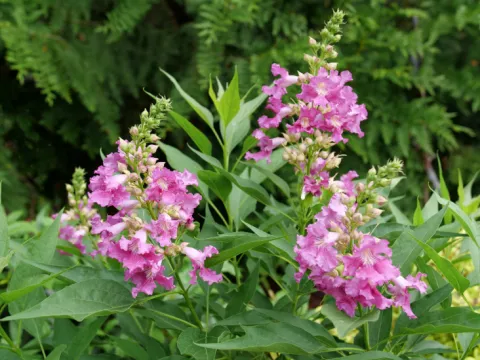
Chitalpa
Chitalpa
Chitalpa (Chitalpa) is a unique intergeneric hybrid derived from cross-breeding Catalpa bignonioides and Chilopsis linearis. It belongs to the Bignoniaceae family and is prized for its ornamental value.
What the section contains
Chitalpa
The plant requires full sun exposure to thrive, bloom effectively, and maintain a dense, attractive foliage structure. It is highly valued in horticulture for its resilience in hot and arid climates.
Regarding soil requirements, Chitalpa prefers well-drained loamy soils. It is critical to ensure proper drainage, as the roots are highly susceptible to rot if subjected to waterlogged conditions for extended periods.
Agrotechnical practices involve regular but moderate irrigation, especially during the establishment phase. Pruning should be performed in the late winter or early spring to remove dead wood and shape the tree for a more aesthetic appearance.
In terms of usage, Chitalpa serves as an excellent ornamental specimen for urban environments due to its pollution tolerance and drought resistance. It is frequently employed in parks, large gardens, and street landscaping.
The most common disease affecting Chitalpa is powdery mildew, particularly in humid or poorly ventilated conditions, leading to white fungal patches on the leaves.
Insect pests, specifically aphids and scale insects, may colonize the foliage and stems, weakening the plant by extracting sap. Regular monitoring is essential to control these infestations early.
Root rot is a major threat in heavy, clay-rich soils that retain too much moisture. Selecting an appropriate planting site with excellent permeability is the best preventive measure.
In extremely hot and dry weather, spider mites can become an issue. Misting the foliage and ensuring the plant is adequately hydrated can help deter these pests.
Proper plant hygiene, such as clearing fallen leaves and conducting yearly pruning, is crucial for minimizing the buildup of pathogens and maintaining long-term tree health.