
Orange prickly pear
Opuntia aurantiaca Lindl.
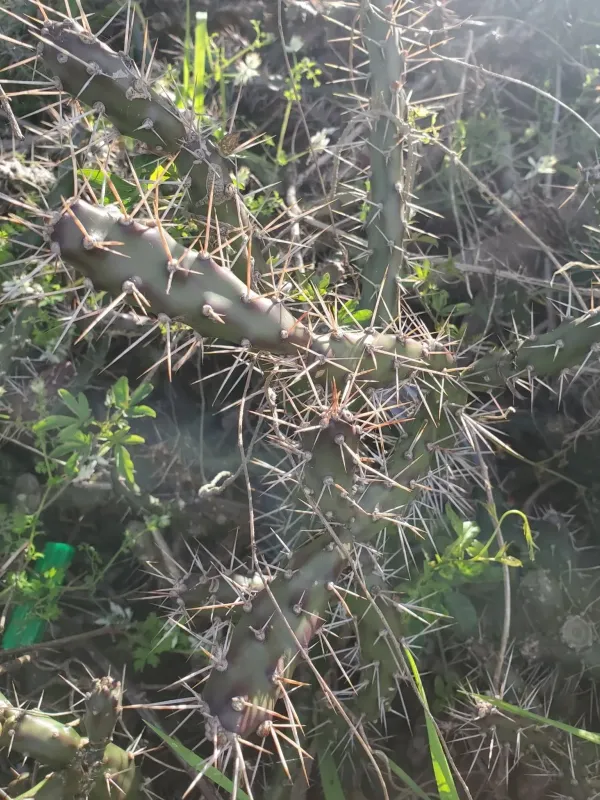
Description
Growing requirements
The orange prickly pear (Opuntia aurantiaca) is a perennial succulent plant belonging to the Cactaceae family. It is native to South America, specifically regions in Argentina and Uruguay, and is known for its sprawling, dense growth habit.
The plant is characterized by its segmented, narrow, and fleshy pads (cladodes) which are armed with sharp, easily detachable spines. These spines serve as an efficient defense mechanism against herbivores and facilitate the plant's spread when segments break off and take root elsewhere.
It thrives in well-drained, sandy, or rocky soils that provide minimal water retention. The plant is exceptionally drought-tolerant and requires full sun exposure to maintain its physiological health and structural integrity during the growing season.
Climatically, it prefers arid or semi-arid conditions with high daytime temperatures. It can endure short periods of cold, but prolonged exposure to freezing temperatures coupled with high humidity often leads to tissue damage and necrosis.
Economically, it is often treated as a problematic invasive species in pastoral areas, although it serves a niche role as a living fence or an ornamental plant in controlled xeriscaping environments.
Main diseases and pests
The primary threats to Opuntia aurantiaca include various fungal pathogens that thrive in overly moist conditions. Root rot and stem rot are the most common diseases that can rapidly destroy the plant's vascular system.
Pest pressure often comes from mealybugs and scale insects. These pests cluster in the areoles, where they feed on sap, leading to stunted growth and providing entry points for viral or bacterial infections.
Control strategies involve precise irrigation management to prevent stagnant water in the soil. Proper spacing between individual plants is also crucial to ensure adequate airflow and reduce humidity levels.
Chemical control with systemic insecticides is effective but should be used judiciously. Integrated pest management, focusing on physical removal and environmental modification, is preferred for long-term health.
Regular field scouting is essential to identify early signs of infestation. Prompt action in removing diseased segments can prevent an outbreak from spreading across the entire cultivated area.