
Indian fig opuntia
Opuntia megacantha Salm-Dyck
Description
Growing requirements
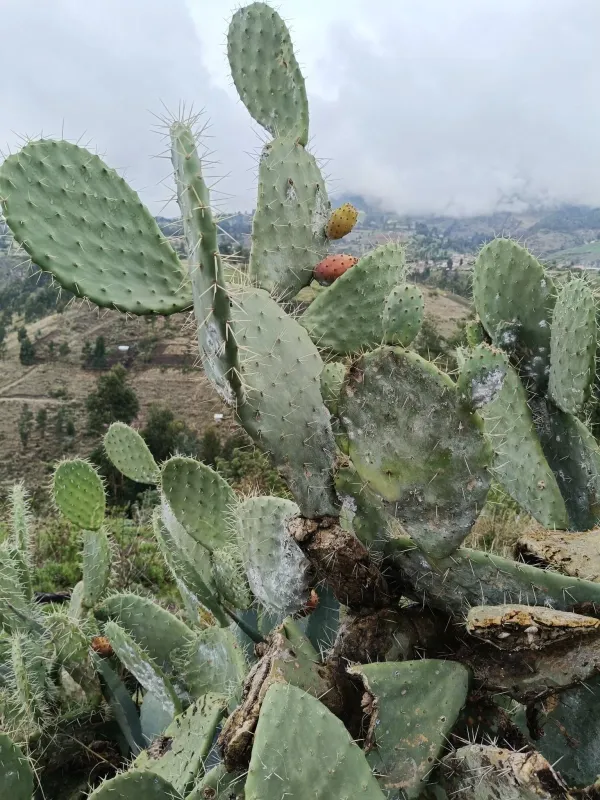
The Indian fig opuntia (Opuntia megacantha) belongs to the Cactaceae family. It is a robust succulent shrub characterized by its succulent, flattened stem segments known as cladodes, which are essential for photosynthesis and water storage in arid environments.
Originating from the semi-arid regions of Mexico and Central America, this crop has become a staple in many warm climates across the globe, including the Mediterranean basin, Africa, and Australia, where it thrives in landscapes that are often unsuitable for conventional agriculture.
Successful cultivation requires well-drained, sandy, or rocky soils with a neutral pH level. The plant is highly sensitive to waterlogged conditions, which promote root rot; therefore, selecting a site with excellent drainage is the most important factor for establishment.
Climatic requirements center on long, hot growing seasons and high solar radiation. While it displays remarkable drought tolerance, consistent fruit yield is achieved through moderate irrigation during the peak development phases, provided that the soil is kept porous and aerated.
The plant serves multiple industrial and dietary purposes. Its fruits are consumed fresh or processed, the pads are used as livestock fodder during dry seasons, and the plant extracts are utilized in the cosmetic, food coloring, and medicinal industries.
Main diseases and pests
The primary pests affecting Opuntia megacantha include the cochineal scale and various species of spider mites. These pests thrive in dry conditions and can significantly damage the epidermis of the pads, necessitating biological control or targeted pesticide applications.
Pathogenic threats such as soft rot caused by Erwinia bacteria and fungal leaf spots are prevalent in environments with high humidity. Proper field management, including sufficient plant spacing to facilitate airflow, is essential to minimize the risk of disease spread.