
Eastern prickly pear
Opuntia humifusa (Raf.) Raf.
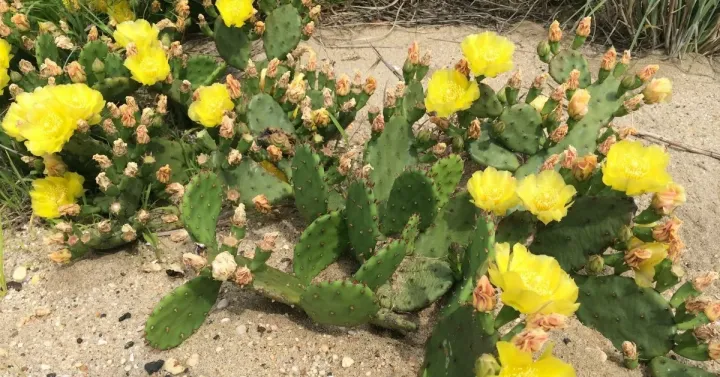
Description
Sowing dates
The propagation of the Eastern prickly pear (Opuntia humifusa) is most effectively achieved through vegetative cutting, using healthy segments known as cladodes.
Planting is best performed in late spring or early summer, ensuring that the soil is sufficiently warm to encourage rapid root development for the new cuttings.
Before burying, the cuttings must be left to air-dry in a cool, shaded environment for several days to allow the cut surface to callus, preventing fungal rot.
Cladodes are planted shallowly in a well-draining medium, ensuring that they are firmly anchored but not deeply submerged, which minimizes the risk of base decay.
For those utilizing seeds, propagation requires sterile containers and consistent greenhouse conditions, as germination is a slow and delicate biological process.
Growing requirements
Opuntia humifusa, a member of the Cactaceae family, is recognized for its exceptional winter hardiness and ability to thrive in temperate climate zones.
The plant demands full, direct sunlight exposure for the majority of the day, as insufficient light levels result in stunted growth and weakened structural integrity.
Soil requirements are minimal regarding nutrients; however, excellent drainage is critical, making sandy or gritty soil types the preferred growing environment.
Environmental conditions must prevent standing water, as the species is highly susceptible to root damage in heavy, saturated, or poorly aerated substrates.
Watering management should follow the rule of infrequent, deep irrigation during the active summer season, followed by a total cessation of water in winter.
Yield
This crop is highly valued for its dual-purpose utility, serving both as an ornamental plant in landscaping and a source of nutritional food products.
The fruits of Opuntia humifusa are edible, rich in essential vitamins, and are processed into jams, jellies, and natural food colorants for various markets.
In certain agricultural regions, the harvested cladodes are processed to serve as a sustainable, fiber-rich supplement in livestock feed formulations.
Because the plant thrives on arid, marginal land where traditional crops fail, it provides a stable yield with very low inputs of fertilizer or irrigation.
Proper management of the plantation ensures decades of production, as the perennial nature of the cactus allows for consistent growth and regular harvests.
Main diseases and pests
The most significant threat to the Eastern prickly pear is fungal disease, typically manifesting as rot when environmental humidity is excessively high.
Pest management focuses primarily on controlling scale insects and mealybugs, which can proliferate quickly on the succulent surface of the cladodes.
Maintaining proper spacing between plants is essential to ensure adequate airflow, which naturally reduces the pressure of most common cactus-specific pathogens.
The application of integrated pest management (IPM) strategies is recommended to preserve the quality of the crop while minimizing synthetic chemical use.
- Regular monitoring for necrotic spots or signs of localized decay.
- Weed removal to prevent the accumulation of moisture near the base.
- Immediate isolation or removal of any tissue showing severe infestation.
Harvesting
Harvesting the fruits occurs when they reach maturity, indicated by a vivid change in color, usually ranging from deep red to a dark, dusky purple.
Extreme care is necessary during the harvesting process due to the presence of glochids, the tiny, barbed bristles that are easily dislodged and penetrate skin.
Fruits are removed from the plant using sharp, sterile shears, ensuring the integrity of the mother plant is maintained for future growth and reproduction cycles.
Post-harvest treatment involves the removal of glochids through brief heat treatment or high-pressure water washing to ensure the product is safe for handling.
Stored in a cool, ventilated environment, the fruits have a relatively short shelf life, necessitating prompt processing or transport to the end-market consumers.