
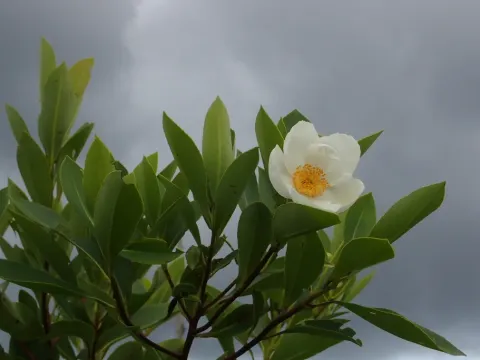
Gordonia
Gordonia
Gordonia is a genus of evergreen trees and shrubs belonging to the family Theaceae. Botanically, these plants are closely related to Camellias, exhibiting dense, leathery foliage and spectacular, large flowers that make them highly desirable for ornamental cultivation and botanical gardens.
What the section contains


Gordonia
Native to the southeastern parts of North America and parts of East Asia, these plants thrive in their natural habitats. They are typically found in moist, boggy forest areas or along water banks, which indicates their preference for mild, subtropical climates with consistent precipitation.
The cultivation of Gordonia requires specific soil conditions, primarily acidic substrates with a pH level between 4.5 and 6.0. The soil must be well-drained, rich in organic matter, and consistently moist, as the root system is sensitive to both extreme drought and prolonged waterlogging.
Gordonia prefers sunny locations or partial shade, provided that the plants are protected from harsh, desiccating winds. In regions with temperate climates, the species may require winter protection, as many varieties possess limited cold hardiness and can be damaged by sudden, severe temperature fluctuations.
In terms of economic and practical use, Gordonia is primarily utilized in landscape architecture and ornamental horticulture. Because of its aesthetic appeal, vibrant foliage, and extended flowering periods, it is widely planted in public parks, residential gardens, and as a centerpiece in professional landscape design.
The main threats to the health of Gordonia plants are fungal diseases, often exacerbated by poor drainage or stagnant air conditions. Root rot caused by Phytophthora species is particularly dangerous, frequently resulting in rapid decline and death if proper soil management is neglected.
Common pests that infest the crop include aphids, spider mites, and scale insects, which can weaken the plant and diminish its decorative value. Effective pest management involves a combination of targeted insecticides and cultural practices, such as maintaining optimal moisture levels and ensuring adequate spacing for airflow.