
Chinese Gordonia
Gordonia sinensis
Description
Growing requirements
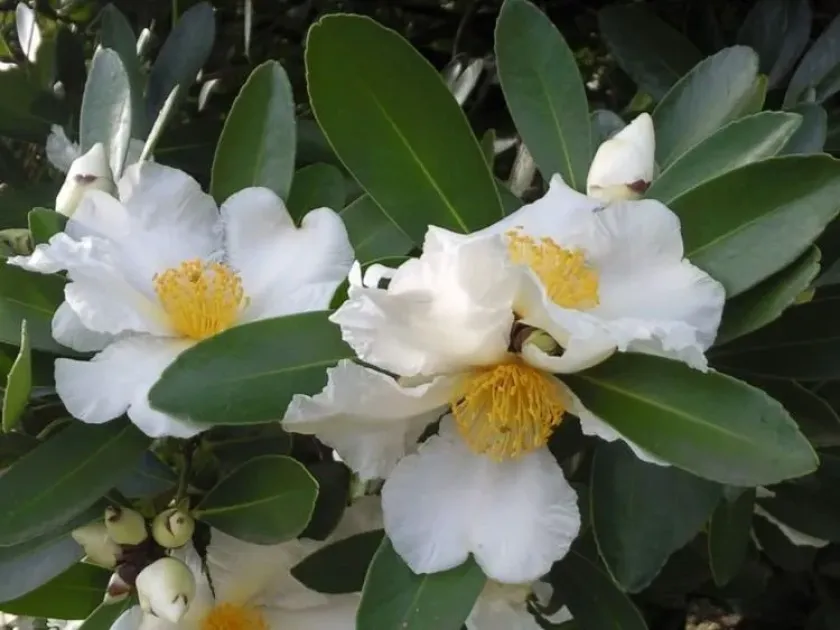
Chinese Gordonia (Gordonia sinensis) is an elegant evergreen species belonging to the Theaceae family. It is highly appreciated for its refined foliage and its resemblance to the prized camellia plants, making it a distinct choice for ornamental gardening.
The plant thrives in well-drained, acidic soil that is rich in organic matter. Proper drainage is essential, as the roots are sensitive to waterlogging and can quickly succumb to rot if the soil remains constantly saturated after rainfall or irrigation.
When selecting a site, it is important to choose a location that provides partial shade or filtered light. While the species is relatively hardy, it performs best when sheltered from drying winds and harsh afternoon sun that can scorch the leaves.
Standard care involves consistent watering during dry periods and applying organic mulch around the base of the plant. This helps to conserve moisture, maintain soil acidity, and keep the root zone cool during the heat of the summer months.
Regarding its utility, the species is primarily used for ornamental purposes in gardens and landscapes. Its compact growth habit and evergreen nature make it suitable for both border planting and as a focal point in specialized collections.
Main diseases and pests
Fungal pathogens represent the most significant threat to Chinese Gordonia, particularly those affecting the roots. Excessive soil moisture often triggers the development of these diseases, leading to systemic weakness and potential plant death.
Pest management should focus on monitoring for common sucking insects such as scale insects and spider mites. These pests thrive in dry conditions and can cause significant damage to the leaf tissue if left uncontrolled over an extended period.
Preventative measures include maintaining good airflow within the canopy through periodic pruning and thinning. Keeping the plant vigorous through balanced nutrition and appropriate watering schedules is the best natural defense against infestations.
If chemical intervention is necessary, the use of targeted systemic insecticides and copper-based fungicides is recommended. Application should be performed during the early stages of infestation to prevent the pest population from establishing itself.
Sanitation practices, such as removing fallen leaves and pruning damaged branches, are vital for disease prevention. Ensuring that gardening tools are disinfected helps to prevent the transfer of pathogens from one plant to another within the garden.