
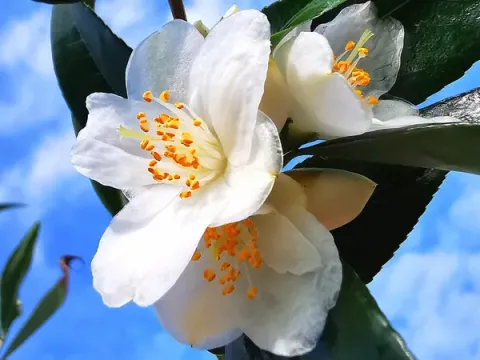
Camellia cuspidata
Camellia cuspidata
Camellia cuspidata is a distinct species within the Theaceae family, native to the forest regions of China. It is highly valued for its slender, glossy leaves and graceful growth habit.
What the section contains
Camellia cuspidata
The plant requires acidic, well-draining soil to thrive. It is essential to ensure the growing medium is rich in organic matter and maintains a pH between 4.5 and 5.5.
Regarding light requirements, this species performs best in partial shade. Excessive direct sunlight can lead to leaf scorch, while deep shade may significantly reduce flower production.
Constant soil moisture is vital for this shrub. However, irrigation must be carefully managed to prevent waterlogging, which often leads to root rot issues in heavy clay soils.
Providing a layer of organic mulch around the base of the plant helps retain soil moisture, suppresses weeds, and maintains the cooler root temperatures that camellias prefer.
The most common pests affecting this plant include scale insects and aphids, which typically cluster on the undersides of leaves or along the stems.
Fungal issues such as leaf spot are frequently caused by overhead watering or high humidity combined with poor air circulation around the foliage.
Phytophthora root rot is a serious threat if the soil remains constantly saturated, often resulting in sudden wilting and decline of the entire plant.
Integrated pest management, including regular inspection and the use of insecticidal soaps, is recommended for controlling early infestations of sap-sucking pests.
Cultural practices such as pruning for air circulation and ensuring proper plant spacing are effective ways to minimize the risk of fungal infections.