
Camellia hybrids
Camellia hybrids
Description
Growing requirements
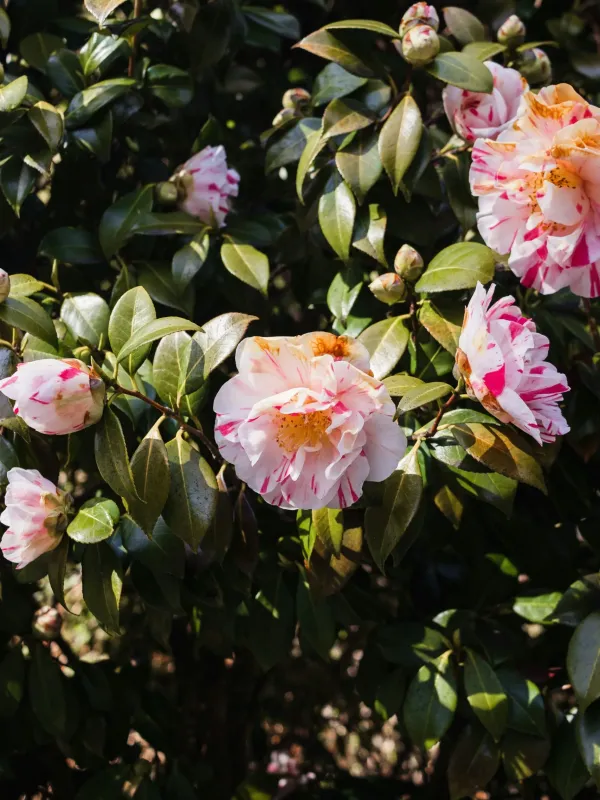
Camellia hybrids belong to the Theaceae family and represent a diverse group of ornamental shrubs and small trees resulting from interspecific breeding. These plants are prized for their glossy evergreen foliage and exquisite, symmetrical flowers that offer a wide range of colors from pure white to deep crimson.
Successful cultivation of Camellia hybrids requires specific soil conditions, primarily an acidic pH ranging between 5.0 and 6.0. The soil must be well-draining, rich in organic matter, and consistently moist but never waterlogged to prevent root rot, which is a major physiological challenge for this genus.
Climate preferences for these hybrids are narrow; they perform best in temperate regions with cool, humid summers and mild winters. Direct sunlight should be avoided, especially in the afternoon, as it can severely scorch the leaves and inhibit healthy development of the plant's canopy.
Agrotechnical maintenance includes regular mulching with pine needles or bark to maintain soil acidity and moisture levels. Nitrogen-rich fertilizers should be applied sparingly during the growth phase, while phosphorus-potassium blends are essential during late summer to support the maturation of flower buds.
In terms of agricultural and commercial use, these hybrids are primary assets in the landscape design and cut flower industry. Modern breeding programs continue to focus on increasing cold hardiness, allowing these plants to be cultivated in a broader range of geographical locations than historical wild species.
Main diseases and pests
The most significant pathological threats to Camellia hybrids are fungal infections such as petal blight and leaf spot diseases. These are typically triggered by high humidity without proper air circulation or by overhead watering that keeps the foliage wet for extended periods.
Common pests include scale insects, aphids, and spider mites, which can cause significant damage to the plant's vascular system. Spider mites, in particular, flourish in low-humidity environments, leading to leaf discoloration and stunted shoot growth in affected specimens.
Integrated pest management (IPM) is crucial; it involves maintaining optimal spacing between plants to ensure adequate ventilation. Removing debris from the base of the plant is a critical sanitary practice to prevent the overwintering of fungal spores and harmful insects.
Chemical control should be applied judiciously, utilizing targeted insecticides or fungicides only when necessary and during the appropriate life cycle stages of the pests. Ensuring that the plant is not under environmental stress, such as drought or nutritional deficiency, is the best defense against infestations.
Routine monitoring of the foliage, especially the underside of leaves and new buds, allows for early detection of potential outbreaks. By maintaining a stable and appropriate environment, growers can minimize the need for heavy chemical intervention and promote long-term plant health.