
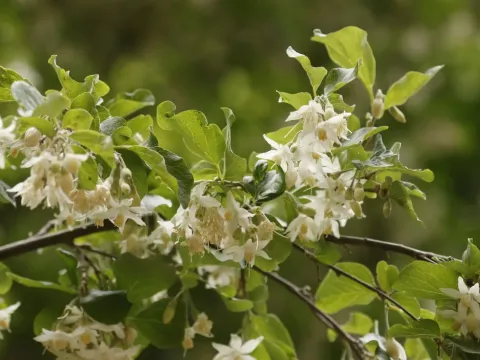
Styrax officinalis
Styrax officinalis
Styrax officinalis is a deciduous shrub or small tree belonging to the family Styracaceae. It is native to the Mediterranean region and parts of the Middle East, thriving in warm, temperate to subtropical climates that support its specific physiological needs.
What the section contains
Styrax officinalis
The plant typically reaches a height of 3 to 5 meters and is characterized by its fragrant, bell-shaped white flowers that appear in late spring. It prefers well-drained, lime-rich, or rocky soils and requires a position with full sunlight to semi-shade for optimal performance.
Climate requirements include protection from severe frost, as the species is sensitive to extreme cold, which can damage its vegetative tissues. It performs best in regions where winters are mild and the growing season is sufficiently long to allow fruit maturation.
Cultivation practices involve maintaining consistent moisture levels during the early development stages, while mature plants show moderate drought tolerance. Regular pruning is essential to maintain structural integrity and remove deadwood, ensuring efficient resource allocation by the plant.
The primary commercial value of Styrax officinalis lies in the extraction of aromatic resin, historically known as storax. This resin serves various industries, including pharmaceuticals for antiseptic preparations, fine perfumery, and the production of traditional incense.
The culture is relatively resistant to pests, but it remains susceptible to root rot if grown in heavy or poorly drained soils. Managing soil texture and ensuring good aeration around the root zone are fundamental to preventing fungal infections.
Common pests that may affect the foliage include aphids and various types of scale insects, which feed on sap and can cause premature leaf drop. Early detection through regular crop scouting and the application of horticultural oils can effectively mitigate these infestations.