
Styrax shweliensis
Styrax shweliensis
Description
Growing requirements
Styrax shweliensis is a rare deciduous shrub or small tree belonging to the Styracaceae family. Naturally, it originates from the mountainous regions of Southwest China, where it thrives in humid and protected forest habitats.
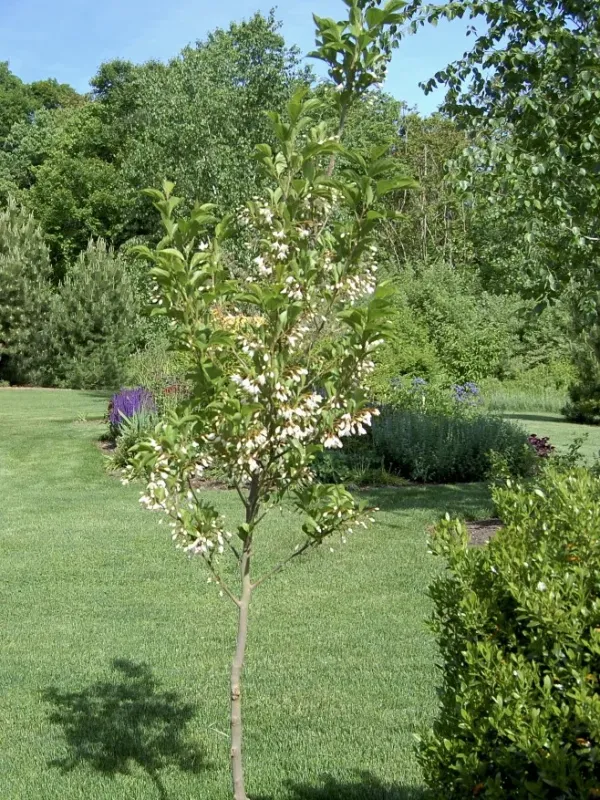
The botanical characteristics of the species include elegant, drooping racemes of white, bell-shaped flowers that emit a delicate fragrance. The foliage is simple and alternate, contributing to the graceful, airy habit of the plant during the growing season.
To succeed in cultivation, this species requires a sheltered location with partial shade. Direct midday sun can cause leaf scorch, so planting it under the canopy of larger trees or on the eastern side of a property is highly recommended.
The soil should be fertile, well-drained, and possess a slightly acidic to neutral pH. Waterlogging is detrimental to the root system, so in heavy clay soils, incorporating coarse sand or gravel for drainage is essential to ensure plant longevity.
In landscaping, Styrax shweliensis is primarily valued as an ornamental specimen for collectors' gardens. Its architectural beauty and flowering display make it an excellent choice for a focal point in specialized planting schemes.
Main diseases and pests
The primary threat to the health of the plant is root rot, which is almost always caused by poor soil drainage. Maintaining a proper irrigation regime is crucial to prevent the substrate from becoming waterlogged.
Aphids can pose a risk during the spring growth flush, especially in dry weather conditions. A simple integrated pest management approach, including periodic inspections, is usually sufficient to maintain the health of the shrub.
Chlorosis is a common issue when the plant is grown in alkaline soils. The lack of available iron leads to yellowing leaves, which requires the application of chelated iron supplements and soil acidification agents.
Cold hardiness is a limiting factor for this species; young specimens require protection during severe winters. Mulching the root zone with organic matter helps stabilize soil temperatures and prevents freezing of the roots.
Fungal leaf spot diseases may occasionally occur, particularly in stagnant, humid air. Proper pruning to ensure good airflow through the canopy is the best cultural practice to prevent such infections and promote vigorous growth.