
Douglas fir
Pseudotsuga menziesii (Mirb.) Franco
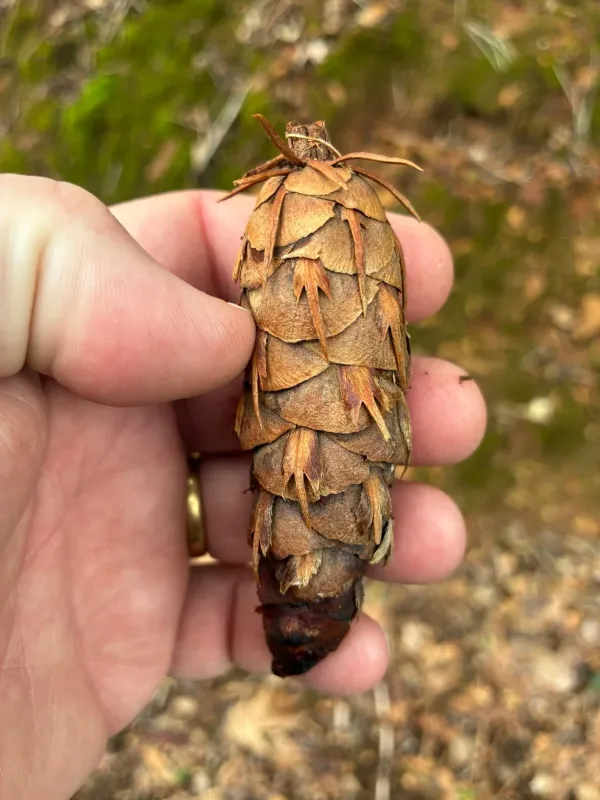
Description
Sowing dates
Sowing Douglas fir seeds requires a stratification process lasting between 30 and 60 days at cold temperatures to break dormancy. For nursery production, use a well-drained medium with a pH range of 5.5 to 6.5 to ensure healthy seedling development.
Seeds should be sown at a depth of 1–2 centimeters. During the germination period, consistent moisture levels must be maintained without allowing the soil to become waterlogged, as seeds are prone to rotting in excessively wet conditions.
Greenhouse conditions with temperatures around 18-20 degrees Celsius promote uniform germination. Protecting young seedlings from direct intense sunlight during their first year is crucial to prevent dehydration and needle scorch.
Transplanting to the permanent site is ideally performed in the dormant season, either early spring or late autumn. Ensuring proper spacing is vital for long-term health and preventing overcrowding, which restricts airflow and light penetration.
Root system management after outplanting is essential. Providing adequate irrigation during the first two seasons significantly increases survival rates and promotes robust establishment of the trees.
Growing requirements
Pseudotsuga menziesii belongs to the Pinaceae family and thrives in temperate climates with high humidity and well-defined seasons. It prefers deep, fertile, and slightly acidic soils that allow for deep root penetration.
While the species is moderately shade-tolerant during its juvenile stage, it requires full sun exposure to reach its maximum growth potential in mature stages. Avoid planting in areas prone to late spring frosts, which can damage new, tender growth.
The tree prefers cool, humid summers and mild winters. It is highly sensitive to soil compaction and poor aeration, which are common limiting factors in industrial forestry sites with heavy clay components.
Water availability is critical; the tree performs best in regions with regular rainfall. It does not tolerate prolonged drought conditions well and will exhibit significant growth reduction if water stress persists over several seasons.
Nutrient management involves monitoring nitrogen and phosphorus levels, especially in commercial plantations. Avoiding calcareous soils is necessary, as high calcium content leads to chlorosis and stunted growth.
Yield
Douglas fir is renowned as one of the fastest-growing coniferous species globally, making it a cornerstone of the timber industry. In optimal environments, it provides high yields of quality wood with excellent mechanical properties.
Plantation rotation cycles are generally shorter compared to other conifers, often allowing for commercial harvesting within 40 to 60 years. The timber is highly valued for construction, flooring, and plywood due to its strength-to-weight ratio.
Yield estimation depends on site quality index, stand density, and genetic improvement of the seedlings. Advanced forestry practices, including selective breeding, have significantly increased the potential output per hectare.
Thinning operations are essential to maintain stand health and maximize wood quality. By removing suppressed trees, resources are concentrated on the healthiest specimens, resulting in larger, more uniform logs at maturity.
Total production volumes can vary based on the specific provenance of the seed used, as some varieties are better adapted to specific microclimates, further enhancing the total harvestable volume over time.
Main diseases and pests
The Douglas fir is susceptible to several fungal diseases, most notably Swiss needle cast, which affects the needles and causes significant defoliation. Early detection and the use of resistant seed stocks are the primary management tools.
Insects like the Douglas fir beetle and various aphid species pose a continuous risk to plantation health. Outbreaks are often linked to periods of drought or tree stress, making site maintenance a key defensive strategy.
Root rot fungi, such as Phellinus weirii, can cause long-term productivity losses in timber stands. Management includes clear-cutting infected areas and replanting with less susceptible species to break the disease cycle.
Providing physical protection against wildlife browsing is necessary in the early years of the plantation, as deer and rodents can severely damage young bark, leading to secondary infection points for pathogens.
- Swiss needle cast
- Douglas fir beetle
- Root rot (Phellinus)
- Aphids
- Needle blight