
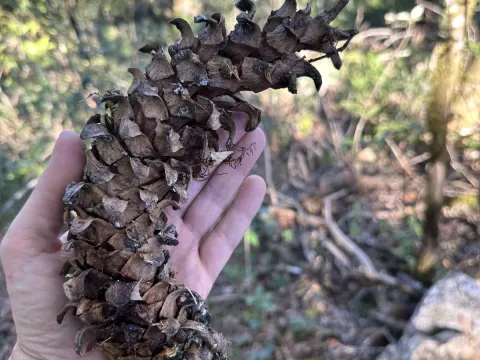
Ayacahuite pine
Pinus ayacahuite
Sowing seeds of Pinus ayacahuite should be performed in late winter or early spring using well-prepared greenhouse conditions for better results.
What the section contains
Ayacahuite pine
The seeds require a cold stratification process for several weeks to break dormancy and ensure a uniform germination rate among the seedlings.
Use a sterile, well-draining potting medium consisting of peat and perlite, keeping the seeds at a depth of about 1 centimeter below the surface.
Maintaining consistent soil moisture is critical; however, overwatering must be avoided to prevent fungal issues known as damping-off in young seedlings.
Transplanting the seedlings into individual pots is recommended once the first true needles appear, allowing for a stronger root development stage.
The Ayacahuite pine, a member of the Pinaceae family, is native to the mountain ranges of Mexico and parts of Central America.
This species thrives in high-altitude environments characterized by cool temperatures, high humidity, and significant seasonal rainfall.
The soil must be deep, fertile, and possess excellent drainage qualities, as the tree is intolerant of waterlogged sites or stagnant conditions.
It prefers a location with partial shade during its juvenile stage, gradually transitioning to full sunlight as the tree matures and hardens.
Environmental stability is key, as the species does not perform well in areas with extreme temperature fluctuations or high urban pollution levels.
Economically, this species is highly valued for its lightweight, straight-grained, and durable timber, which is ideal for woodworking and furniture.
The tree provides excellent material for interior construction, cabinetry, and craft projects due to its resistance to warping and decay.
In landscaping, the Ayacahuite pine is prized for its aesthetic appeal, featuring long, soft needles and impressively large, hanging cones.
Sustainable forest management allows for a consistent yield of timber over a 50 to 80-year cycle, depending on the site index and growth rate.
Beyond its timber, the species contributes significantly to biodiversity and soil stabilization in reforestation projects in its native regions.
Fungal diseases like needle rust are common in dense plantations, particularly during periods of prolonged wet weather or poor ventilation.
Insect pests, such as aphids and scale insects, often target young trees, causing stunted growth and reducing the overall vitality of the stand.
Bark beetles pose a severe threat to mature trees, especially those already under stress from drought or improper management practices.
Proactive management requires regular thinning of forest stands to improve airflow and reduce the chances of rapid disease spread.
Integrated pest management strategies, including the use of targeted biological controls, are recommended for maintaining the health of pine plantations.