
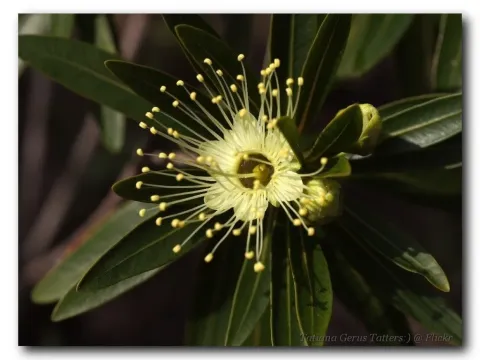
Xanthostemon verticillatus
Xanthostemon verticillatus
Xanthostemon verticillatus is a distinguished member of the Myrtaceae family. Originating from the tropical regions of Queensland, Australia, this evergreen shrub is naturally adapted to moist coastal environments and riverine habitats.
What the section contains
Xanthostemon verticillatus
The cultivation of this species requires a warm, tropical climate. In regions outside its native range, it must be grown in controlled environments such as greenhouses or conservatories, where temperatures remain above the frost threshold throughout the year.
Proper soil management is critical for the health of Xanthostemon verticillatus. It demands a well-draining, nutrient-rich substrate with an acidic to neutral pH. A mix containing organic compost and horticultural grit is often recommended to ensure roots receive sufficient oxygen.
Botanically, the plant is characterized by its whorled leaf arrangement and brush-like, vibrant flowers. These blossoms are typical of the Myrtaceae family and serve as a significant ornamental feature, making the shrub a prized plant for tropical landscaping.
Maintenance involves a steady watering schedule. While the plant prefers consistent soil moisture, it is imperative to prevent waterlogging, as the root system is susceptible to decay if kept in stagnant, poorly aerated conditions.
Root rot caused by pathogens such as Phytophthora is the most common threat, usually triggered by excessive irrigation or lack of proper drainage. Ensuring that the pot or planting hole has a robust drainage layer is a primary preventative measure.
Pests like spider mites and mealybugs can pose risks to the plant's foliage. Regular monitoring and maintaining proper humidity levels around the canopy help in discouraging these pests from establishing colonies on the leaves and stems.
Low light intensity can result in sparse growth and reduced flowering. To maximize the aesthetic potential of the shrub, it should be situated in a bright location with filtered sunlight, especially during the peak of the growing season.
Nutrient deficiencies, particularly iron chlorosis, can occur if the soil pH is not properly managed. Applying balanced liquid fertilizers specifically formulated for acid-loving or tropical plants will help maintain deep green leaf color and plant vigor.
Periodic pruning is essential to maintain a dense, compact form and to promote healthier growth. By removing dead or crossing branches, gardeners can improve airflow, which significantly reduces the risk of fungal outbreaks in the dense foliage canopy.