
Yellow featherflower
Verticordia chrysantha
Description
Growing requirements
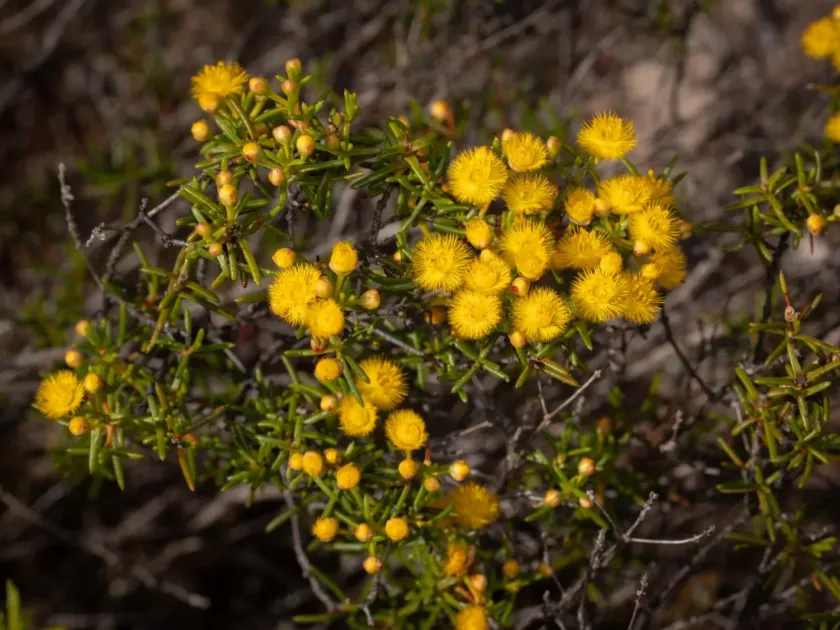
Verticordia chrysantha, commonly known as the yellow featherflower, is a perennial shrub belonging to the Myrtaceae family. Native to Western Australia, this plant is well-adapted to arid, sandy environments and represents a unique aesthetic choice for xeriscaping.
The botanical structure consists of delicate, feathery yellow flowers that form dense clusters, giving the plant its common name. The foliage is fine, linear, and aromatic, contributing to its ornamental value in both gardens and specialized floral production.
Cultivation requirements necessitate extremely well-drained, sandy soils. The species is highly sensitive to waterlogged conditions, which can quickly lead to root rot. Soils should be low in phosphorus, as the plant has evolved to thrive in nutrient-poor native substrates.
Full sun exposure is mandatory for Verticordia chrysantha to maintain its compact habit and prolific flowering. Exposure to shade not only results in weak, spindly growth but also makes the plant significantly more susceptible to physiological stress.
Climate needs involve a Mediterranean-type cycle with warm, dry summers and cool, dry winters. Successful cultivation depends on mimicking these native patterns while ensuring consistent airflow to manage humidity levels around the canopy.
Main diseases and pests
Root rot, primarily caused by Phytophthora species, is the most critical threat to the longevity of the plant. It is often triggered by excessive moisture and poor soil aeration, making proper site selection essential.
Powdery mildew can occur in environments with high humidity and stagnant air. This fungus manifests as a white coating on the leaves and stems, leading to stunted growth if left untreated.
Insect pests, including scale insects and spider mites, are frequent challenges. These organisms feed on the sap, causing chlorosis and weakening the overall vitality of the shrub during periods of stress.
Integrated pest management strategies are recommended, focusing on early detection and the use of targeted biological or chemical controls. Preventive pruning is also helpful to improve canopy aeration and reduce humidity.
Maintaining high hygiene standards by using sterilized growing media and disinfecting tools helps significantly in mitigating the risk of introducing soil-borne pathogens into the nursery or garden environment.