
Verticordia plumosa
Verticordia plumosa (Desf.) Druce
Description
Growing requirements
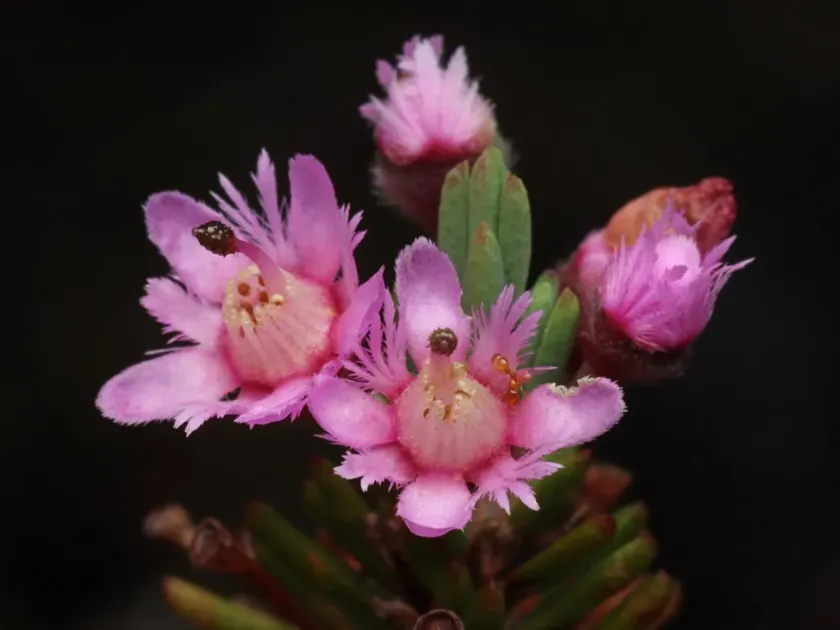
Verticordia plumosa, commonly known as the plumed featherflower, is a distinctive evergreen shrub within the Myrtaceae family. Native to the southwestern regions of Western Australia, it thrives in sandy, nutrient-poor soils characteristic of heathlands.
This plant is noted for its delicate foliage and terminal clusters of small flowers. The flowers are distinguished by their feathery sepals, which provide the plant with a unique, textured appearance that is highly sought after in modern horticulture.
Cultivation success depends on providing full sun exposure and well-draining soil. It is critical to avoid waterlogging, as the species is highly susceptible to root diseases when grown in heavy, poorly aerated media. Neutral to slightly acidic pH levels are preferred.
Temperature management is essential, as the plant does not tolerate extreme frost or excessive humidity. In non-native environments, it is most effectively grown in pots or greenhouses, allowing for precise control over drainage and atmospheric moisture levels.
The primary use of Verticordia plumosa is within the ornamental nursery industry and for high-end floristry. Its stems are durable and long-lasting, making them excellent choices for fresh cut flower arrangements in both local and international markets.
Main diseases and pests
Root rot, primarily caused by Phytophthora species, is the most significant threat to this culture. Ensuring impeccable soil drainage and avoiding excess water is the primary defense strategy against these soil-borne pathogens.
Scale insects and spider mites are the most common pests found on Verticordia. These organisms can weaken the shrub by sap-feeding. Early detection through regular monitoring and the use of horticultural oils or targeted insecticides are standard management practices.