
Willow-leaved paperbark
Melaleuca saligna
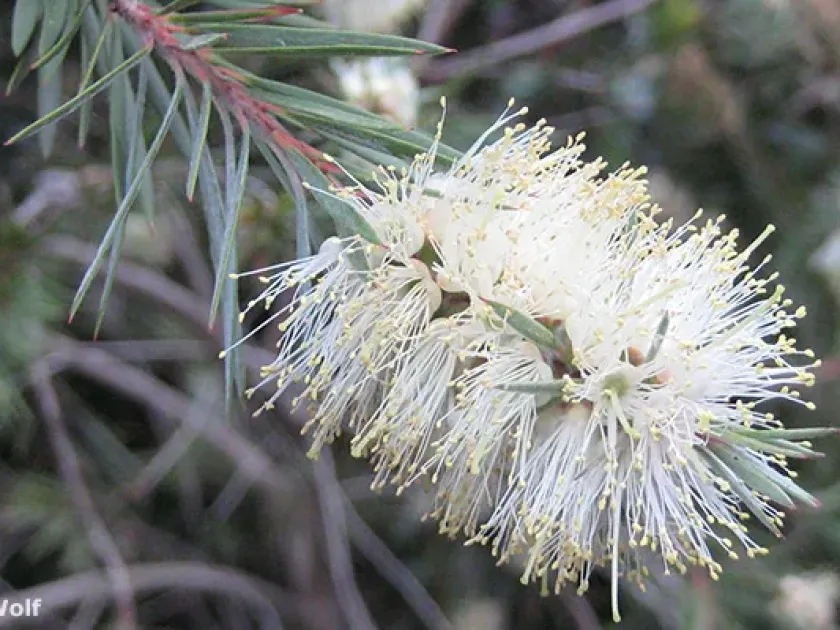
Description
Growing requirements
Willow-leaved paperbark (Melaleuca saligna) is an evergreen tree belonging to the Myrtaceae family. It is recognized for its slender, willow-like foliage and distinctive, exfoliating papery bark.
Native to Australia, this plant naturally thrives in wetland habitats. It is well-adapted to poorly drained soils, making it an excellent candidate for cultivation in riparian zones or areas with consistently high soil moisture levels.
The plant demands full sunlight for optimal growth and high oil yield. It is sensitive to frost, requiring greenhouse conditions or mild climates to avoid severe damage to the photosynthetic tissue during winter months.
Agronomic management focuses on maintaining soil moisture and providing adequate nutrients. Regular application of mulch helps retain water and suppress weeds, ensuring the plant allocates energy to leaf biomass production.
Economically, Melaleuca saligna is valued for its volatile oils extracted from the leaves. These oils have significant applications in the pharmaceutical, cosmetic, and traditional medicine industries due to their bioactive compounds.
Main diseases and pests
Common pests affecting this species include scale insects and spider mites, which can cause significant stress to the foliage during periods of low environmental humidity.
Root rot caused by Phytophthora species can occur in poorly ventilated environments. Maintaining proper sanitation and avoiding water stagnation is essential for plant health.