
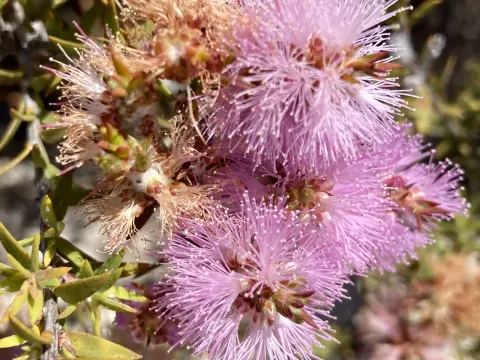
Striated Honey Myrtle
Melaleuca striata
Melaleuca striata, known commonly as the Striated Honey Myrtle, belongs to the Myrtaceae family. Native to the southwestern regions of Western Australia, it is well-adapted to sandy, well-drained habitats and is a key representative of the Australian shrubland flora.
What the section contains
Striated Honey Myrtle
The plant thrives in full sun, which is critical for maintaining its dense, bushy habit and promoting vigorous flowering. It demonstrates remarkable tolerance to seasonal drought, making it an excellent candidate for regions with Mediterranean-type climates.
Soil requirements for optimal growth include acidic to neutral pH levels and superior drainage capacity. Waterlogging is the primary cause of plant failure, so site selection should prioritize raised beds or naturally porous sandy soils to protect the delicate root system.
Botanically, it is characterized by narrow, alternate leaves and small, distinctive spikes of flowers. These blooms often emerge in vibrant shades, contributing to its high aesthetic value in landscape restoration and horticultural applications.
Beyond its ornamental appeal, the species is investigated for its potential in producing essential oils rich in bioactive compounds. These oils are valued in various industries for their natural antiseptic and therapeutic properties, similar to other Melaleuca species.
The main threats to Melaleuca striata involve fungal pathogens, particularly when soil moisture is poorly managed. Phytophthora species and other root rot organisms can be devastating if the soil remains waterlogged for extended periods.
Common pests include scale insects and mealybugs, which may colonize stems and leaves during periods of stress. Integrated pest management, including regular monitoring and horticultural oil applications, is effective for control.
Sooty mold may develop as a secondary result of pest infestation. Ensuring good air circulation and cleaning foliage can help prevent the buildup of honeydew-producing pests that lead to such mold growth.
Proper sanitation in the nursery or garden environment is essential to prevent the spread of diseases. Tools used for pruning should be disinfected regularly to avoid cross-contamination between plants.
Maintaining balanced fertilization is also vital, as excessive nitrogen can lead to succulent growth that attracts sap-sucking insects. A gradual-release, low-phosphorus fertilizer is generally recommended for native Australian species.