
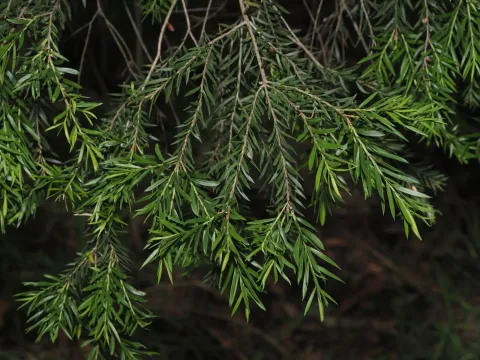
Melaleuca decora
Melaleuca decora
Melaleuca decora is a hardy, evergreen shrub or small tree belonging to the Myrtaceae family. It is well-regarded for its attractive papery bark, which peels in layers, and its dense clusters of white flowers that bloom primarily during the warmer months.
What the section contains
Melaleuca decora
Native to the eastern coastal regions of Australia, this species is naturally found in swampy forests and floodplains. Due to its evolutionary background, it possesses a remarkable ability to survive in both waterlogged soils and periods of moderate drought.
The plant thrives in full sun exposure but maintains a healthy appearance in partial shade. It is highly adaptable to diverse soil types, ranging from sandy loam to heavy clays, provided there is adequate space for the root system to establish.
In terms of climatic requirements, Melaleuca decora prefers a subtropical or warm-temperate environment. While it is tolerant of light frost once established, prolonged freezing temperatures require protective measures to prevent tissue damage.
Maintenance in a cultivation setting involves minimal intervention. Pruning after the flowering cycle encourages a bushier habit and ensures the tree maintains an aesthetically pleasing shape throughout the growing season.
Root rot caused by Phytophthora species represents a significant threat in poorly drained or overly compacted soils. Ensuring proper soil aeration is the most effective management strategy to mitigate this risk.
Scale insects are common pests that colonize the stems and foliage, extracting sap and weakening the plant. Integrated pest management, involving neem oil or systemic insecticides, is recommended for controlling infestations.
Spider mites may manifest during hot, dry spells when the plant is under moisture stress. Regular overhead irrigation or high-pressure water sprays can help deter mite colonization and keep the foliage clean.
Fungal leaf spots can occur in humid climates where airflow is restricted. Pruning the interior branches to improve canopy ventilation is a vital cultural practice to reduce fungal disease pressure.
Nutrient deficiency is rare in natural settings, but in ornamental landscapes, chlorosis may occur due to improper soil pH. Testing the soil and adjusting the alkalinity is crucial for maintaining vibrant green leaves.