
Melaleuca dawsonii
Melaleuca dawsonii
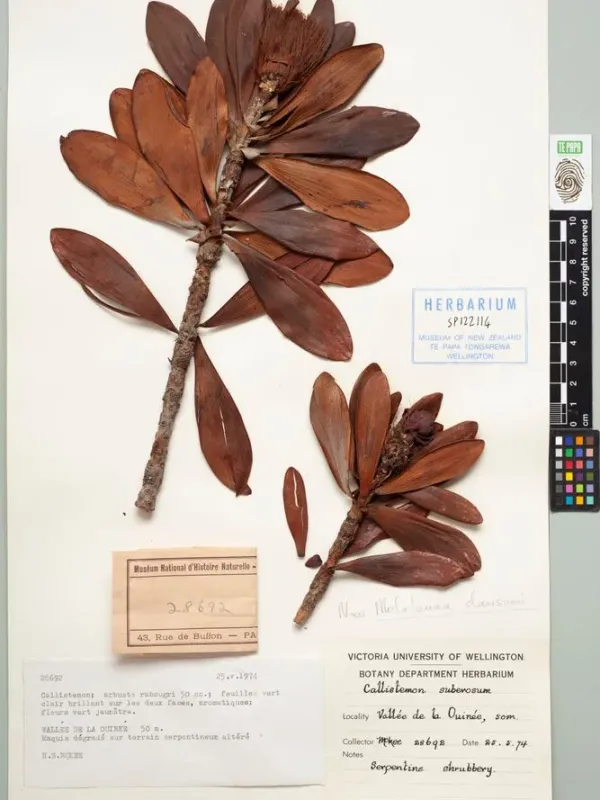
Description
Growing requirements
Melaleuca dawsonii belongs to the Myrtaceae family, comprising perennial shrubs and small trees native to Australia. This species is highly adapted to the arid and semi-arid environments of its home range.
Cultivation requires well-drained, sandy, or gravelly soils that prevent waterlogging. The plant performs best in nutrient-poor substrates, as excessive fertilization can sometimes hinder its natural development.
Full sun exposure is a critical requirement for this species. It thrives in open locations with high light intensity, which is essential for maintaining the plant's structural integrity and stimulating flower production.
The climate must be frost-free, mimicking subtropical or Mediterranean conditions. Extreme cold or extended periods of frost can cause significant tissue damage, making it unsuitable for open fields in temperate zones.
Agronomic management involves periodic light watering during dry spells, although the plant displays high drought tolerance once established. Minimal human intervention is usually sufficient for healthy growth.
Main diseases and pests
Root rot, caused by various species of Phytophthora and Pythium, is a major threat to Melaleuca dawsonii, especially when drainage is inadequate and soil moisture levels remain too high.
Pests such as scale insects, aphids, and spider mites can infest the foliage, particularly under stress conditions in greenhouses or during prolonged periods of high heat and low humidity.
Managing these threats requires a proactive approach, including the maintenance of proper spacing between plants to ensure good airflow and lower the humidity levels around the foliage.
Fungal diseases like leaf spot or powdery mildew can occur if the plant is grown in dense, poorly ventilated areas where moisture accumulates on the leaf surfaces.
Integrated pest management strategies are recommended, focusing on early detection and targeted treatments to maintain plant vitality throughout the vegetative cycle.