
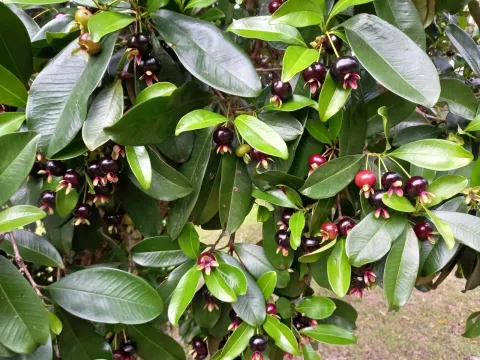
Grumichama
Eugenia dombeyi
Grumichama is primarily propagated through seeds, as vegetative methods like cuttings are often less successful. Seeds are recalcitrant and lose viability quickly, so they should be sown immediately after being extracted from the fruit into a moist, well-draining potting mix.
What the section contains
Grumichama
The ideal time for sowing in greenhouse conditions is early spring, which allows for increased day length. Germination requires stable temperatures between 22 and 25 degrees Celsius to be successful.
Young seedlings are sensitive to direct sunlight and require partial shade during their first months of development to prevent leaf scorch. Transplanting into larger containers or permanent locations should occur once the root system is sufficiently developed.
In its native Brazil, the tree can reach substantial heights, so spacing is crucial when planning an orchard. Maintaining a distance of at least 4 to 5 meters between trees ensures adequate light penetration and airflow.
Trees grown from seed typically require 4 to 6 years to reach their first fruiting stage, necessitating patience and consistent care from the grower during the juvenile phase.
As a member of the Myrtaceae family, Grumichama is a tropical plant that thrives in warm climates and is intolerant of frost. It requires a sunny location sheltered from strong winds to maintain optimal humidity levels around the foliage.
The soil should be rich in organic matter, slightly acidic to neutral, and possess excellent drainage properties. Waterlogging is detrimental to the roots, so heavy soils must be amended or raised to ensure proper drainage.
Regular irrigation is essential, particularly during the flowering and fruit-setting phases. Water stress during these critical periods often results in fruit drop and poor yields.
For regions outside the tropics, Grumichama is best suited for greenhouse cultivation where the microclimate can be strictly managed. Avoiding sudden temperature fluctuations is key to keeping the tree healthy.
Balanced fertilizers should be applied during the active growing season in spring and summer. Providing adequate micronutrients is vital for boosting the tree's natural defense mechanisms and improving fruit quality.
Yields of Grumichama depend heavily on the age of the tree and the quality of maintenance. A mature, healthy specimen can produce a significant crop, totaling many kilograms of fruit per season.
The fruit, often called the Brazilian cherry, has delicate skin and soft flesh, which significantly limits its shelf life and transportability. Consequently, it is best consumed fresh or processed immediately into juices and jams.
Fruiting frequency can vary based on local weather patterns. Under favorable conditions, the tree may exhibit multiple flushes of flowers and fruit throughout the year.
Peak productivity is generally achieved by trees over 10 years of age. Consistent sanitary pruning and adequate nutrient supply are critical factors in maximizing the annual harvest potential.
The economic value of this crop is tied to the unique flavor of the berries, which are highly prized for their cherry-like taste, making them a desirable specialty fruit for local markets.
Fungal diseases are the primary threats to Grumichama, especially in environments with high humidity and poor air circulation. Regular thinning of the canopy helps maintain a healthy dry environment for the leaves.
Pests such as scale insects and mealybugs frequently target young shoots, extracting sap and weakening the tree. Effective management involves biological controls or targeted, systemic insecticides.
Root rot often occurs due to poor soil structure or overwatering. Maintaining a porous, well-draining growing medium is the most effective preventative measure against these soil-borne pathogens.
Birds are a major challenge during the ripening period, as the dark, sweet berries attract local fauna. Protecting the canopy with netting is often necessary to secure a portion of the harvest.
Root-knot nematodes can also suppress growth in some soil types. Routine soil testing and the use of resistant rootstocks, where possible, can help mitigate these biological risks.
Harvesting Grumichama must be done entirely by hand due to the extremely fragile nature of the berry skin. Only fully ripened fruits with a deep purple or near-black coloration should be selected.
Ripeness is indicated by a deep, dark color change. Because overripe fruits tend to fall off the tree rapidly, frequent monitoring of the plantation during the harvest window is essential.
Post-harvest life is extremely limited at ambient temperatures. To maintain quality and aesthetic appeal, the berries should be cooled immediately after harvesting and kept in cold storage.
In commercial settings, fruit is packed in shallow containers to prevent crushing. Minimizing the height of fruit layers is vital to ensure that the delicate berries arrive in sellable condition.
The harvest is usually staggered over several weeks, as fruits on the same tree do not ripen simultaneously. This requires the grower to perform multiple selective pickings throughout the ripening season.