
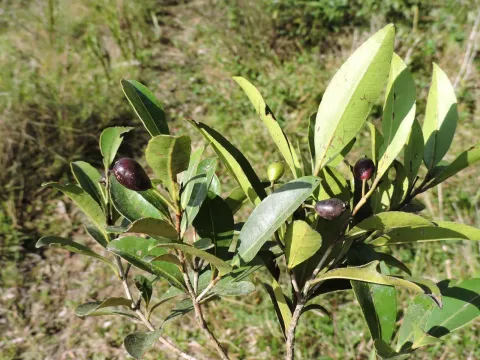
False clove pimenta
Pimenta pseudocaryophyllus
Pimenta pseudocaryophyllus, commonly known as false clove pimenta, is a perennial evergreen shrub or small tree belonging to the Myrtaceae family. It is native to the Atlantic Forest regions of Brazil, thriving in humid, tropical ecosystems.
What the section contains
False clove pimenta
The plant requires well-drained, nutrient-rich, loamy soils to develop its root system fully. It is highly sensitive to waterlogging, necessitating the selection of elevated planting sites or the construction of raised beds in commercial orchards.
Climatic requirements are focused on maintaining high humidity and temperatures between 22°C and 28°C. The species lacks significant frost tolerance and must be grown in tropical or subtropical zones to prevent damage to the delicate leaf tissue.
Light management is crucial; while the plant enjoys sunlight, nursery-stage specimens benefit from partial shade. As the plant matures, it requires full access to filtered or direct sunlight to optimize the secondary metabolism responsible for essential oil synthesis.
Regular fertilization with organic compost is recommended to maintain soil fertility. Micronutrients, especially magnesium and iron, play a vital role in sustaining the dark green color and health of the leaves.
The primary economic value of Pimenta pseudocaryophyllus lies in its foliage and bark, which are utilized for essential oil extraction. The chemical composition is rich in eugenol and other phenolic compounds, providing the characteristic clove-like scent.
Harvesting is typically conducted by selective pruning of young branches. This manual method allows for a sustainable yield while encouraging the plant to form a denser canopy, which increases the total amount of harvestable biomass.
Post-harvest handling is critical to ensure high-quality oil yields. The harvested plant material should be dried in a controlled environment protected from direct sunlight to minimize the degradation of volatile aromatic compounds.
Steam distillation remains the gold standard for extracting oil from the leaves. This process ensures that the purity of the essential oil is maintained without using synthetic solvents, meeting strict industry standards.
The applications for this essential oil are diverse, ranging from traditional herbal medicine, where it is used as a digestive aid and antiseptic, to the high-end fragrance industry, which values its unique, spicy botanical profile.