
Rock fig
Ficus platypoda
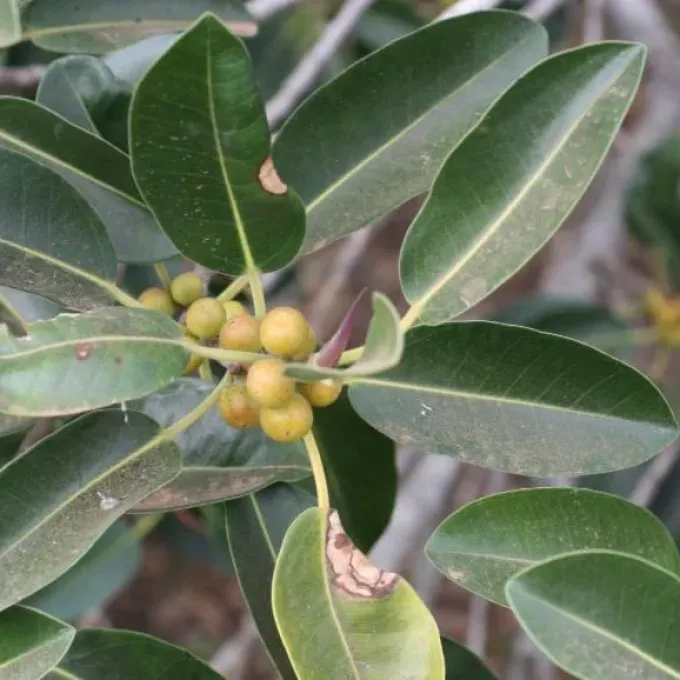
Description
Growing requirements
The rock fig (Ficus platypoda) is a perennial woody plant species belonging to the Moraceae family. In its natural habitat, it often displays hemi-epiphytic characteristics, germinating in the canopy of other trees before extending its roots down to the soil to establish a robust framework.
Native to Australia, this species is adapted to arid and semi-arid environments. Its range of cultivation is primarily concentrated in tropical and subtropical regions, as the plant is highly sensitive to frost and requires consistently warm temperatures to support its active growth stages throughout the year.
Successful cultivation of this crop depends on the availability of well-draining soil with a neutral to slightly acidic pH. Proper soil aeration is critical; heavy or waterlogged soils are detrimental to the fleshy root system and often lead to root rot or reduced vigor in the development of the plant.
The plant is noted for its high solar radiation tolerance, thriving in bright, open environments. In agricultural settings, it requires adequate light exposure to maintain dense foliage; while adapted to drought, regular irrigation during the peak growing season significantly enhances plant health and biomass production.
Agrotechnical management involves periodic nutrient application to support leaf growth and structural integrity. Propagation is generally performed through cuttings, which require a stable temperature environment between 22 and 28 degrees Celsius to successfully promote rooting and shoot development in the initial stages.
Main diseases and pests
Common pests affecting the rock fig include scale insects and mealybugs, which feed on the sap of the foliage. These pests can significantly compromise plant vigor, and their management requires regular monitoring and intervention if infestations are detected on the underside of the leaves or along the stems.
Spider mites represent a frequent threat in low-humidity conditions, particularly in indoor or controlled environments. Preventive measures include maintaining appropriate moisture levels in the surrounding air and ensuring that the plant is not subjected to prolonged periods of drought-induced stress.
Fungal infections, such as root rot, are primarily associated with improper irrigation management and poor soil drainage. When moisture levels exceed the capacity of the growing medium, conditions become ideal for the proliferation of water-borne pathogens that can swiftly cause systemic decay.
Disease management strategies rely on the implementation of strict cultural practices, including the use of sterilized tools for pruning and the maintenance of adequate spacing between plants to improve airflow. These steps help reduce the prevalence of humidity-related pathogens within the cultivation area.
The application of approved fungicides and insecticides is recommended only when environmental controls fail to suppress pest or disease activity. Integrated pest management (IPM) techniques remain the most sustainable approach for preserving the health and commercial quality of this unique botanical resource.