
Poulsenia armata
Poulsenia armata
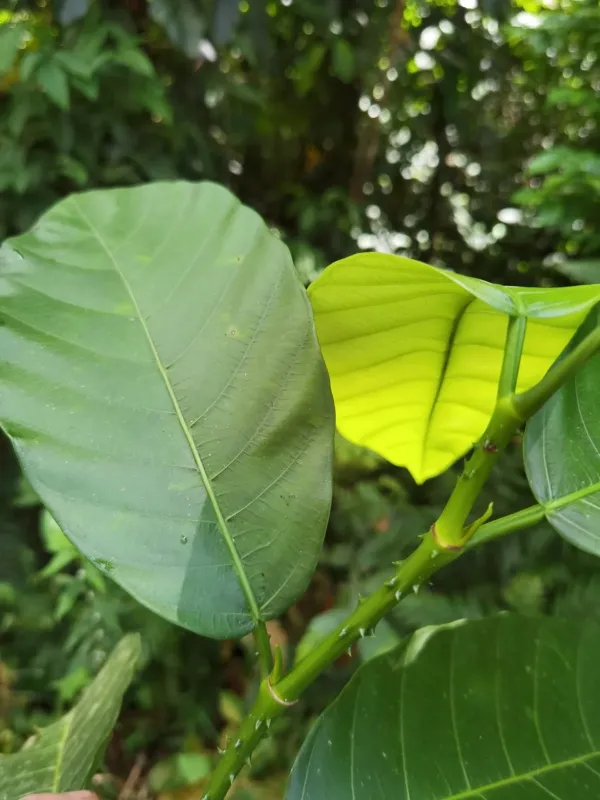
Description
Growing requirements
Poulsenia armata is a prominent tree species belonging to the Moraceae family, widely recognized for its ecological importance in neotropical forests. It typically grows as a large canopy tree, reaching significant heights and possessing a thorny trunk that serves as a protective mechanism against herbivores.
The native distribution of this species spans from Mexico through Central America to the northern parts of South America. It thrives in humid lowland tropical rainforests, where it is often found in primary and secondary forest formations, adapting well to diverse microclimates within these regions.
To ensure successful cultivation, the plant requires deep, well-drained soils rich in organic matter. While it prefers consistent rainfall, soil aeration is critical, as stagnant water can lead to root rot and hinder the tree's development during its early growth stages.
Climate-wise, Poulsenia armata is strictly tropical and does not tolerate frost or prolonged cold snaps. It requires high humidity levels and stable warm temperatures to maintain active photosynthetic activity and consistent biomass accumulation throughout the year.
Beyond its ecological value, the tree has historical and modern utility in local economies. Its bark fibers are exceptionally strong and are traditionally processed for the manufacturing of cordage and fishing lines, while its wood is appreciated for durability in structural applications.
Main diseases and pests
Despite its robustness, the species can be susceptible to various fungal pathogens when cultivated in dense, non-natural monocultures. Proper spacing is necessary to allow for air circulation and to prevent the spread of foliar diseases.
Insects, particularly wood-boring beetles, represent the most significant threat to the health of adult trees. Integrated pest management strategies are advised in plantation settings to monitor infestation levels and prevent significant damage to the timber quality.