
Persian ironwood
Parrotia persica (DC.) C. A. Mey.
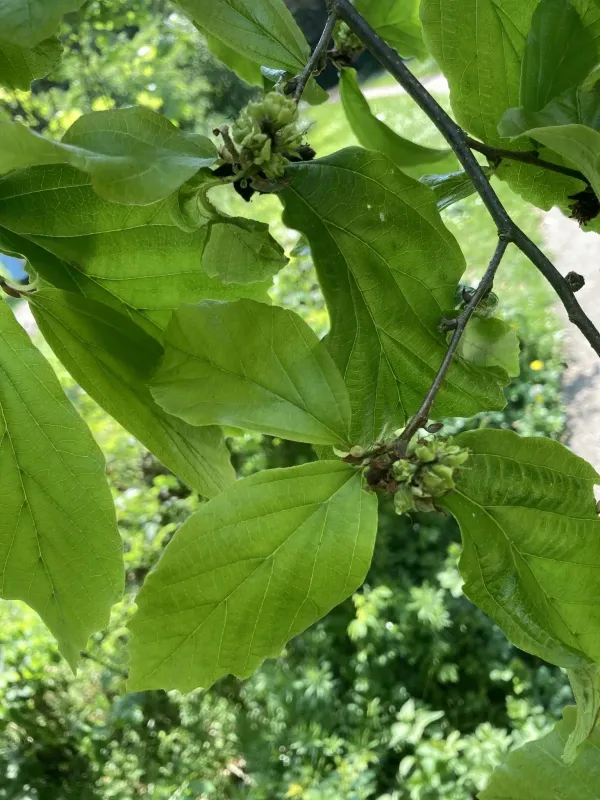
Description
Growing requirements
The Persian ironwood, scientifically known as Parrotia persica, is a unique tree belonging to the Hamamelidaceae family. Native to the Talysh Mountains of Azerbaijan and northern Iran, this deciduous tree is highly valued for its dense, incredibly hard wood and spectacular autumn foliage.
This crop thrives in temperate to subtropical climates with high atmospheric humidity. While it is hardy in many zones, young saplings require protection from severe frost and strong, desiccating winds that can damage the delicate branch structure.
Soil requirements for Parrotia are specific: it prefers deep, well-drained, and slightly acidic loams rich in organic matter. Avoid heavy clay soils where moisture retention can cause root issues, and ensure the planting site is enriched with compost for healthy root development.
The tree prefers partial shade or dappled sunlight rather than intense, direct sunlight. In its natural habitat, it grows in the understory of forests, so mimicking these conditions in a garden setting ensures the leaves do not scorch during the peak of summer.
Cultivation practices include consistent irrigation during the establishment phase, as the tree is not drought-tolerant when young. Mulching is highly recommended to maintain consistent soil moisture levels and to regulate soil temperature around the root zone.
Main diseases and pests
Persian ironwood is widely recognized for its robust nature and natural resistance to most common pests and diseases. This makes it an ideal choice for low-maintenance landscapes where the use of pesticides is discouraged or restricted.
Occasional infestations of spider mites or scale insects may occur if the tree is under stress from drought or improper environmental conditions. Keeping the tree hydrated and healthy is usually sufficient to prevent most insect outbreaks without the need for chemical intervention.
Fungal issues such as root rot can develop if the soil is poorly drained or if the tree is planted too deeply. Ensuring the root crown remains at or slightly above the soil line is a critical management practice for long-term survival.
Mechanical damage to the trunk can serve as an entry point for opportunistic pathogens. Care should be taken when using lawn mowers or trimmers near the base of the tree to avoid stripping the bark, which can lead to localized necrosis.
Monitoring the foliage for signs of chlorosis can help detect nutrient deficiencies early. If leaves begin to yellow, a soil test should be conducted to adjust pH or nutrient availability, as the tree performs best in the specific acidic range it evolved in.