
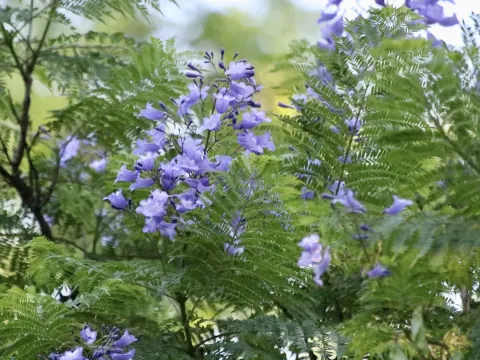
Jacaranda
Jacaranda
Jacaranda is primarily propagated through seeds, which require a warm environment between 22°C and 25°C for successful germination. Seeds should be sown in a well-draining, lightweight soil mix and covered lightly with a thin layer of medium.
What the section contains

Jacaranda
Early spring is the optimal time for sowing in controlled environments, allowing the seedlings to establish a strong root system before the summer heat. Germination typically occurs within two to four weeks under consistent moisture.
Semi-hardwood cuttings can be used for asexual propagation during late summer. Utilizing rooting hormones significantly improves the success rate and encourages vigorous development of the young root system.
Young trees require frequent repotting during their first three years of growth to accommodate their rapid root expansion. As the tree matures, root pruning or topsoil replacement becomes the standard maintenance procedure.
Transplanting to permanent outdoor locations is only advisable in frost-free regions, as young specimens are highly susceptible to cold shock and foliage damage during temperature fluctuations.
As a member of the Bignoniaceae family, Jacaranda is a sun-loving plant that requires full exposure to thrive. Inadequate sunlight leads to spindly growth and a significant reduction in the characteristic profuse flowering.
The ideal soil for cultivation should be fertile and neutral to slightly acidic. Effective drainage is a critical prerequisite; waterlogged soil leads to rapid oxygen depletion in the root zone and eventual decline.
The plant flourishes in temperatures ranging from +20°C to +30°C. While mature trees can withstand mild, short-term drops in temperature, they are fundamentally tropical, and prolonged cold causes severe physiological damage.
Water management is crucial; it requires a balanced approach with moderate watering during the growing season and a strict reduction during the dormant phase. Proper moisture regulation prevents stress and ensures leaf retention.
Native to South America, the Jacaranda has evolved to tolerate seasonal changes in humidity. Providing adequate space for canopy expansion is necessary as the tree naturally develops into a large, spreading specimen.
The most common pests affecting Jacaranda are aphids, scale insects, and spider mites, which thrive in low-humidity indoor or greenhouse conditions. These pests typically congregate on the underside of leaves.
Chemical control involving systemic insecticides is effective for localized infestations. It is essential to apply treatments according to the product guidelines, ensuring total coverage of the foliage.
Root rot is the primary disease risk, often resulting from overwatering or poor soil structure. The onset of this disease is characterized by chlorosis of the leaves followed by rapid wilting of branches.
Preventative measures focus on maintaining strict hygiene in the cultivation area and ensuring proper air circulation. Using pathogen-free growing media is essential for seedlings and young trees.
Ongoing monitoring is the most effective defense strategy. By observing for early signs of discoloration or stunted growth, growers can take corrective actions before the infection impacts the structural integrity of the tree.