
Pandorea ricasoliana
Pandorea ricasoliana
Description
Growing requirements
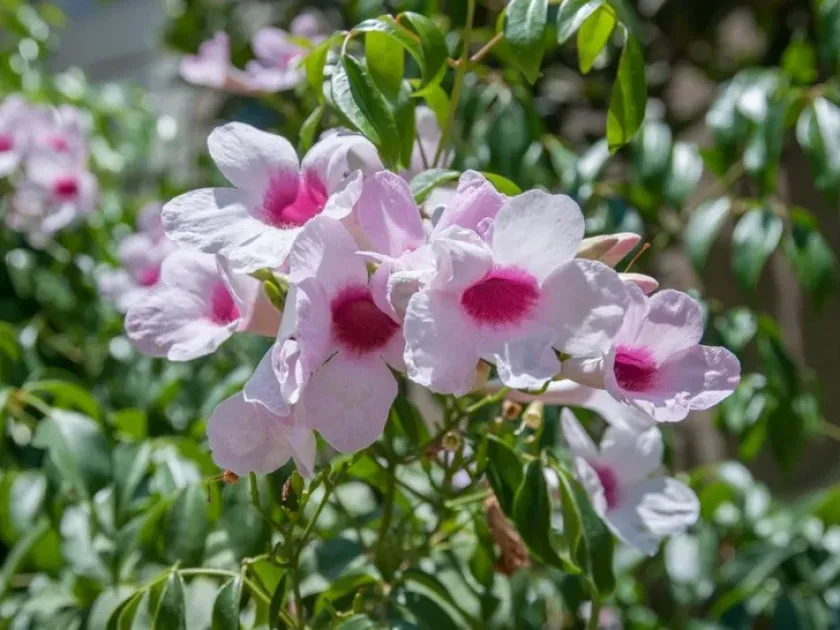
Pandorea ricasoliana, belonging to the Bignoniaceae family, is a vigorous evergreen woody vine. Native to South Africa, it is widely appreciated in landscaping for its rapid growth and elegant, trumpet-shaped flowers.
The plant thrives in subtropical climates and requires protection from frost and freezing temperatures. In regions with harsh winters, it is best suited for greenhouse cultivation or as a seasonal container plant.
A well-drained, nutrient-rich soil is essential for the healthy development of this climber. It prefers slightly acidic to neutral soil pH and benefits from regular applications of organic matter to maintain fertility.
Light exposure is the most critical factor for success; the vine requires full sun to partial shade to bloom profusely. Adequate sunlight ensures the development of strong, flowering stems instead of weak, leggy growth.
Maintenance involves frequent watering during the growing season and the provision of robust supports. Pruning is necessary to keep the plant within desired bounds and to encourage the bushier growth habit required for a spectacular floral display.
Main diseases and pests
Common pests affecting Pandorea ricasoliana include aphids, scale insects, and spider mites, which can cause significant stress to the plant during dry spells.
Fungal issues, particularly root rot, often occur if the soil remains waterlogged or if drainage is insufficient, leading to rapid wilting.
Integrated pest management strategies, such as regular inspection and maintaining healthy plant vigor, are recommended to minimize the reliance on chemical controls.
Good air circulation is vital to prevent leaf spots and fungal proliferation; thinning the canopy annually helps in reducing humidity trapped within the foliage.
In case of pest outbreaks, targeted horticultural oils or systemic insecticides may be used, provided they are applied according to the manufacturer's instructions for ornamental climbers.